Under U.S. President Donald Trump - and his eventual ideological successor, J.D. Vance - The United States has waged an aggressive campaign of economic conquest against Canada over the past twelve months. Not with tanks or missiles, but with tariffs, trade weaponization, and industrial sabotage.
On March 4, 2025, as Trump's 25% tariffs on Canadian goods took effect, Republican Rep. Carlos Gimenez (R-FL), appearing on CNN, alluded to military options while defending the measures: "Instead of taking kinetic action, he's taking economic action” - this reckless talk of "kinetic action" - a military euphemism for lethal force - on U.S. television panels by elected officials, combined with repeated threats of escalating tariffs and casual musings about annexation, has done what decades of constitutional wrangling never could: it has united Canada.
From St. John’s to Victoria, from Québec City to Calgary, the country finally agrees on one thing - enough.
Canada’s new energy and trade agreements with China and India must exclude the U.S. dollar entirely. Every transaction should be settled exclusively in Canadian dollars (CAD).
Canada and its partners require fabrics, agriculture and seafood, manufactured goods, critical minerals, and energy - and all of it must be priced and traded in CAD. No exceptions.
The real long-term payoff of a Canadian-dollar trade system is psychological. When a trusted, high-standard producer like Canada proves it can operate outside the U.S. dollar system and emerge stronger, the illusion of American monetary dominance begins to crack.
If Prime Minister Mark Carney and his advisors truly wanted to twist the knife, they could quietly begin selling a portion of Canada’s U.S. Treasury holdings - roughly $475 billion worth. Perfectly legal. Perfectly deniable. And perfectly capable of nudging U.S. borrowing costs higher while applying sustained downward pressure on the U.S. dollar.
Once these deals with China and India are locked in, Canada should move decisively to divest its U.S. Treasury holdings.
At the same time, Canada must build its own independent AI infrastructure - designed and operated in Canada, for Canadians, by Canadians - potentially in partnership with our domestic telecommunications giants. Economic sovereignty now includes technological sovereignty.
The spell the White House and the U.S. State Department believe they wield only works as long as others comply.
The Bay du Nord oil project in Newfoundland is moving ahead. LNG Newfoundland is advancing. A Manitoba Hudson Bay energy export terminal, the Trans Mountain Expansion Project - with a newly announced second line - and the revival of Energy East would give Canada the physical capacity to make this strategy real.
After a decade of a weakened currency inflating grocery bills, Canadian households would see a windfall. Inflation would cool. Interest rates could remain lower for longer. And the Bank of Canada would regain breathing room it hasn’t had in years.
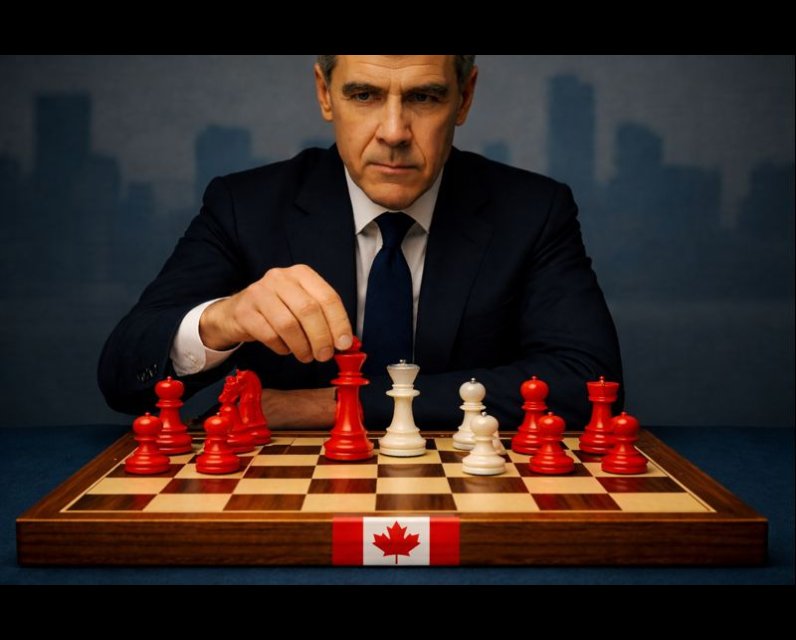
The board is set. Canada moves - and this time, it’s checkmate!




Comments
Totally Agree.
We should be dumping US T-Bills on world markets.
We need to keep reserve supplies of US dollars to buy their goods and services, but as we pursue increased diversification of trade away from the US toward more trustworthy and respectful trading partners we will need less and less of them. This is a potent weapon.
As a percentage of total global foreign reserves, the US dollar has been in a long term decline and has fallen below 60% for the first time since 1995. This continued after covid-19 while the percentage of Euro and CAD reserve holdings have mostly held firm or even risen - although their percentage remains much less than the US dollar.
The BRICS countries are trying to float an alternative reserve currency to the US dollar. To the extent reserve holdings of that, the Euro and less conventional currencies like the CAD increase at the expense of the US dollars, they represent a real threat to America's continued ability to service its massive debt and to fund its military.
Having the as the world's reserve currency has allowed America to live well beyond its means. A collapse of international trust in the US could see reductions in the percentage of US dollars in reserve banks accelerate.