
Stay informed

'Is this the Pleb? It's Pierre Poilievre speaking': Inside the raucous, very online world of conservative influencers
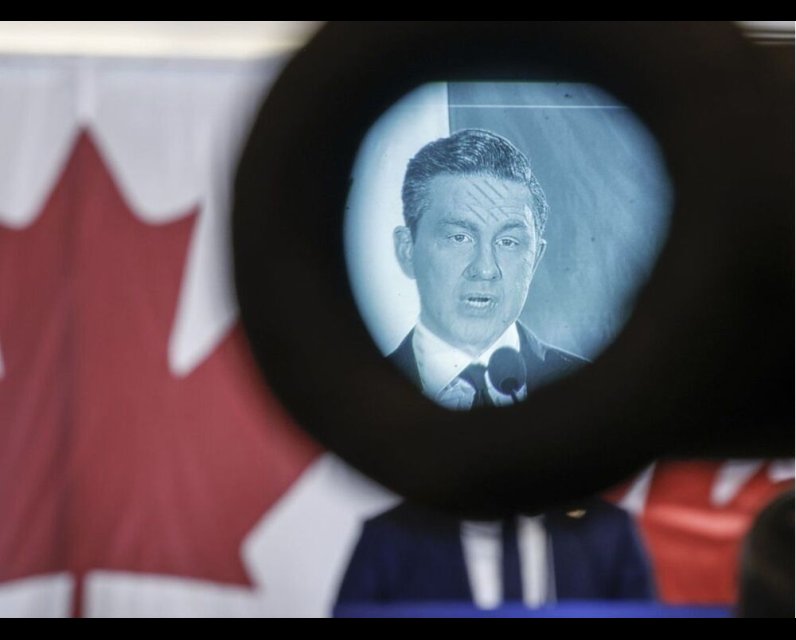
OTTAWA — Weeks after the 2025 federal election, Nick Belanger was on the phone when he started receiving calls from an unknown caller.
Given he was already on a call, he declined to answer. The person tried again and Belanger relented.
“I’m like, hello, who is this? Why do you keep calling me?” he recounts in a livestream.
“Is this the Pleb?” he says the voice asked. “It’s Pierre Poilievre speaking.”
Belanger, better known to his tens of thousands of followers on X and YouTube subscribers as “The Pleb Reporter” who were watching his livestream that July day, was surprised to find himself in a roughly 40-minute conversation with the Conservative party leader, who only weeks earlier was campaigning for the job of Canada’s prime minister.
On the livestream, he relays parts of their conversation interspersed with calls he takes from viewers, who he invites to join with their thoughts about the election.
Poilievre called to check on him, Belanger says at one point, as he was feeling dejected by the party’s recent election loss. In return, Belanger offered his sympathies “for what happened with Trump and the tariffs and how this was COVID all over again in Canada.”
“I’m like this is COVID all over again,” he says he told the Conservative leader. “He agreed, by the way.”
The rise of political influencers has marked a new era in Canadian politics. The power they wield through the audiences they capture is undeniable.
Last election, their content dominated the internet, according to a joint report released last October from the Canadian Digital Media Research Network and the Media Ecosystem Observatory, which declared “influencers have become the information brokers of the internet.”
Nowhere has their influence become more evident than with the Conservative Party of Canada, whose recent convention in Calgary featured a new “influencer” category for conservative and right-wing creators, nearly all of whom espouse a staunchly pro-Poilievre message, while Poilievre’s office seeks to expose the leader to as wide an audience as possible.
That has touched off a debate within the wider party about the extent to which it should embrace these creators and whether the risk of doing so outweighs the reward.
From the start, Ben Woodfinden, Poilievre’s former communications director, said the party was always going to gravitate to more digital voices, given the Conservative leader’s own digital savvy that allowed him to amass the following he has.
“He has an influencer-style approach to politics,” he said. “I don’t think that’s a bad thing. I think that’s the future of politics in many ways.”
Since the election, Poilievre’s team has shifted its media strategy from rarely doing any, save for ethnic media and conservative-friendly voices, to putting him up for interviews with traditional TV broadcasters, including the CBC, and lumping in influencers as “independent media.” (National Post has not had an interview with Poilievre since December 2023.)
Poilievre himself also follows his analytics and is known for asking for details on how many views or clicks a product receives.
The thinking behind the new strategy is that Conservatives need to reach different audiences and that these appearances do not signal agreement with the opinions expressed on the platform.
Dimitri Soudas, once a communications director for former Conservative prime minister Stephen Harper, said he would not lump this new brand of conservative influencers into the same basket when it comes to the question of engagement.
“I think that some of them are doing a disservice to the very cause that they claim to defend. Why? Because they prioritize outrage instead of persuasion,” he said, adding that some operate in an ecosystem that values “ideological purity” and have an ethos that drives them to “chase the clicks, the likes and obviously the financial gain.”
“They just speak to a convinced minority instead of the persuadable majority.”
In fact, Soudas said, “some of them drive more votes to the Liberals than to the actual Conservative Party of Canada.”
But these creators are not politicians. They operate within their own lines. They say their faithfulness is first and foremost to their audience.
That’s what Belanger said when National Post asked for an interview, which he politely declined, but answered several questions in a conversation over WhatsApp. What he instead pitched was a livestreamed interview, saying he could use it for content, which is monetized and would be a “win-win.”
The creator, who in videos and livestreams has said he lives in Montreal, in many respects embodies the intersection of online conservative influencers with real-life Conservative politics, became a fixture at many of Poilievre’s campaign rallies last year, livestreaming the crowds and massive line-ups to enter, encouraging his viewers to jump to the Conservative leader’s online broadcasts once the events got underway and say “Pleb sent us here.”
“You guys will never get to understand what it felt like to tour the country for five weeks and get asked for pictures, hugs,” he told his livestream audience after the campaign. “It was the greatest experience of my life.”
During the campaign, he said he never reached out to Poilievre directly. The party nevertheless took note. At one point, he recounted how Sarah Fischer, the party’s communications director, messaged him directly to say “we love your streams” and watched from Conservative headquarters.
On Christmas Eve last year, he did finally reach out to Poilievre. He texted his assistant to ask him to come on a livestream, which the Conservative leader did for a few minutes, to wish Belanger and his many viewers a brief Merry Christmas.
Behind Belanger, among other images was a “F–k Carney sticker.”
Soudas questioned wisdom of Poilievre’s choice. “I definitely wouldn’t advise to go on that.”
Past Conservative leaders have had to navigate moments when the friendly voices they once engaged with took a turn. When he was Conservative leader, Andrew Scheer sought to distance himself from Rebel News when former host Faith Goldy, who he sat down with while running for the party’s leadership, attended a white supremacist rally in Charlottesville, Virginia.
Former NDP leader Jagmeet Singh’s campaign also dropped an OnlyFans creator from campaign events after previous anti-Israel comments she made online were discovered.
Poilievre also drew criticism, including from within his own caucus, when during an appearance on the YouTube channel “Northern Perspective,” he called the leadership of the RCMP “despicable” over handling of Trudeau-era scandals.
Mario Zelaya, a 40-something-year-old businessman-turned-part-time-influencer based in Burlington, Ont., began posting to TikTok several years ago, said it wasn’t until last year he saw a massive jump in viewership when a staff member suggested making accounts on X, Facebook and Instagram and re-posting the same content there.
His monthly viewership clocks around 100 million, he says, which has turned him into something of a public figure.
“I was at my kids basketball tournament last year, and there was 11 and 12 year-olds that wanted to take pictures of me, and I thought it was the weirdest thing in the world.”
Poilievre also phoned him after the election, which he says was a short conversation where the Conservative leader thanked him.
Fans of these influencers recently had the chance to meet them in person during an event that Zelaya, along with Belanger, co-organized to coincide with the Conservative convention in Calgary, which was livestreamed for those who could not attend.
Hundreds showed up, according to videos from the event, which featured a litany of other influencers who have ascended to a certain online fame.
“An individual had driven all the way from Vancouver to be there. Another person drove three, four hours. Another person came from Saskatchewan,” Zelaya recalled. His count of selfies taken ranges into the hundreds,
When he took the stage, the first words out of his mouth reflected how weird it all felt for someone who sits in a lawn chair filming videos.
The rise of this political creator phenomenon can be traced back to the pandemic and post-COVID-19 period, says Cole Hogan, a Conservative who has worked on digital campaigns for former Alberta premier Jason Kenney (who is now a Postmedia board member) and Ontario Premier Doug Ford.
The spike in viewership on YouTube during those months, with many consuming political content for the first time, coincided with the leadership race that elected Poilievre as Conservative leader, a race where he sold hundreds of thousands of party members by appealing directly to Canadians for whom politics was new and who were still angry over COVID.
Audiences watching this content look for “infotainment” or a “slant,” Hogan said, with a preference for news and information delivered in a “conservative-ish” way.
“They like personalities more than they like straight-up broadcasters.”
Belanger, a former garbage truck driver who now runs his channels full-time, earning revenue from his millions of views anchored in his 255,000 YouTube subscribers and more than 172,000 followers on X. He, like some others, also have merchandise
He began by posting on X and then moving to YouTube, where the oldest video is from 2022. Last election, he said a direct message from Polymarket’s CEO led to some sponsorship during election.
He credits his rise to being in the right place at the right time, referring on his channel to the Freedom Convoy as a “religious experience.” He would visit the protest on weekends, because he lived in the region and had grown envious of the YouTubers hosting near-constant livestreams that he saw with massive followings. He wanted to tell the convoy’s story.
When he did start making political content, his audiences ate it up when he would make fun of former prime minister Justin Trudeau, while an anti-Trudeau wave swept across the country.
He also uses humour to make his politics entertaining and sees himself as one of his audience, so he knows what they want.
He presents himself as a self-described “internet troll,” who takes no greater pleasure than seeing the “left meltdown” and regards himself on the frontlines of the country’s culture wars.
While he broadcasts his fandom for Poilievre and professes to speak for his base, he has also publicly criticized the Conservative leader over his support for funding Ukraine and his recent statement underscoring support for Greenland’s sovereignty, going so far as to say whoever told him to post the latter “should be fired.”
Yet, there is another key to Belanger’s rise: His raw talent. He runs livestreams like call-in radio shows that give shades of the firebrand conservative broadcasting giants that have dominated talk radio.
“I always wanted to be a radio broadcaster,” he once told his channel. He grew up listening to talk radio, calling into sports and wrestling radio shows as a teenager.
“I loved radio. I even put a deposit down at the Montreal radio and television school and I never ended up going. But now I get to be a broadcaster, which is fun.”
Jasmin Laine came to influencing through a decade-plus career spent in morning radio in Winnipeg and with a public speaking past.
In just a couple of years, the 20-something boasts a viewership that ranges into the tens of millions through her podcast and YouTube channel, not to mention myriad of other platforms.
Her professional background is part of what the Conservative party saw as attractive when she pitched herself to speak at its convention last month, along with the fact that mental health advocacy forms part of her story. Her name was on the distribution list Conservatives used to send out talking points and other key messages ahead of the convention, typically reserved for partisans who provide media commentary for traditional outlets, but is not off-limits to others.
Laine has featured Poilievre on her platforms in a friendly sit-down style interview format three times, including once during the election with his wife, Anaida, which Conservatives viewed as a success, partly because of how widely it reached.
She has also interviewed U.S. Ambassador to Canada Pete Hoekstra and has spoken on a podcast about her off-the-record conversations with American contacts.
A viewership into the tens of millions is part of what Laine emphasized in her pitch to the party. She also provided an overview of what she wanted to say. “Voila, I got an email, like, right before the convention pretty much.”
While some Conservatives speculated in the room that she could be using the stage as a way to launch a future run for the party, Laine says “absolutely not.”
That remains the answer for the right now but, a few moments later, a possible opening appeared.
“For all I know, in another six years or something, maybe I’ll change my mind.”
Besides her passion for her work, Laine cities a desire to have a big family and retain control of her own schedule.
Hustle is another feature of how these creators built their brands. Laine describes her workday as averaging 12-hours, often done, she says, with a sleeping dog at her feet.
Poilievre’s tenure of the party has already given rise to candidates successfully elected as members of Parliament from conservative broadcasting and media-based pasts.
Andrew Lawton, a former broadcaster with True North, which later morphed into Juno News, who authored a biography of Poilievre, was elected during the 2025 campaign, as was Aaron Gunn on Vancouver Island, a conservative activist who later made films railing against federal Liberal and provincial NDP drug and justice policies.
As one of the few women hustling in conservative influencer world, Laine says her audience includes younger women and often receives direct messages from them.
Some users have drawn complimentary comparisons between her and Turning Point USA CEO Erika Kirk, the widow of its assassinated former leader and prominent conservative activist, Charlie Kirk.
Asked about that, Laine dismisses it as an unnecessary example of drawing “American-style politics” into Canada.
“I also think it’s just like, super weird and sexist to say that I’m somebody I’m not because I also have blonde hair and blue eyes.”
Laine attended last month’s influencer meet-up, which was the first time she met many of her counterparts and was surprised by how they appear in public.
“Some pretty harsh facing personas online, but they were so kind, like, just so kind normal people.”
She says because of her politics and platforms, assumptions are often made about her ability to strike friendships and garner professional respect across political lines.
“I think that sometimes I get lumped in with others who maybe have a little bit more of an intense approach than I do. And so that’s too bad, but it is what it is. So welcome to being on the online sphere where everybody has opinions about you.”
National Post
Our website is the place for the latest breaking news, exclusive scoops, longreads and provocative commentary. Please bookmark nationalpost.com and sign up for our politics newsletter, First Reading, here.

Unpublished Newswire

Comments
Be the first to comment