
Stay informed
Unpublished Opinions


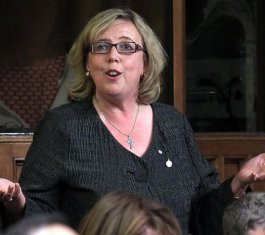
Ottawa's wait-and-see strategy carries risk, warns Quebec's emissary in CUSMA review
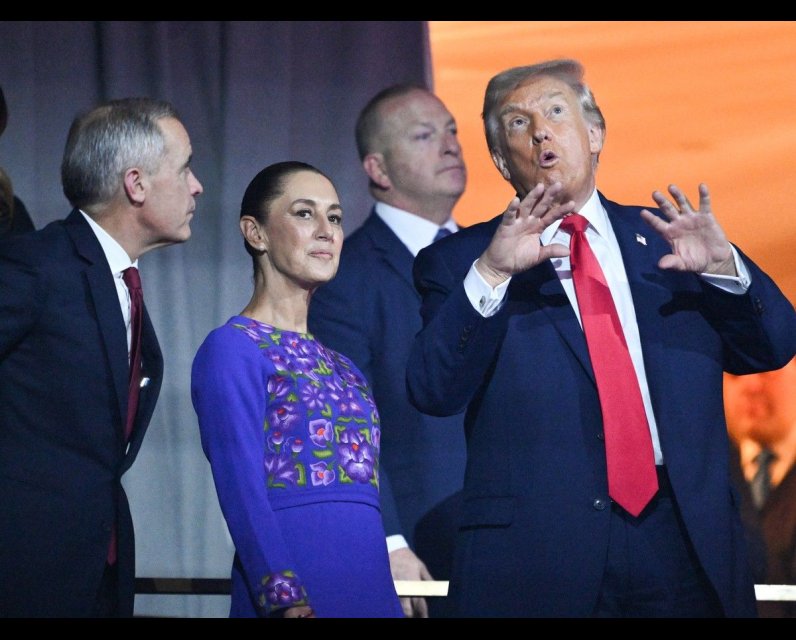
OTTAWA — Quebec’s representative for the upcoming review of the Canada-U.S.-Mexico Agreement (CUSMA) is warning that Ottawa’s strategy of “waiting and not rushing” to sign a tariff relief deal with the U.S. carries its own risk “because things could get worse.”
Louise Blais is an experienced diplomat, having served in embassies in Washington, Tokyo and Paris before being named Canada’s consul general in Atlanta in 2014 and Canada’s deputy permanent representative to the United Nations in New York between 2017 and 2021.
Blais said she had been providing informal advice and information in a pro bono manner to the Quebec government for about a year, but she got a call from Quebec Premier Christine Fréchette after she took office asking her to consider taking on a more formal role.
It is customary for Quebec to name representatives during trade negotiations. Raymond Bachand, a former finance minister, became chief negotiator for the province in 2017 during the renegotiation that led to CUSMA under Trump’s first mandate.
Blais, however, said that “this time is a little bit different” because the North American trade deal is up for review, and is not a renegotiation chapter-by-chapter.
In the lead-up to the CUSMA review, Blais will act as an “emissary” for the province.
In an interview, Blais rejected the idea that there’s no urgency for Canada on signing a trade deal with its neighbour. Prime Minister Mark Carney recently told the CBC that other countries that he did not name are unhappy with agreements they reached with the U.S.
“Quebec believes that we need to engage constantly and without delay. The uncertainty is having real impacts,” said Blais. “We have companies now that are closing in Quebec,” she said, adding that the forestry sector and its related industries are hit particularly hard.
Just this week, South Shore Furniture, a Quebec-based furniture maker, announced it is closing its doors after 86 years of operation . The company blamed U.S. tariffs and the dumping of cheap furniture from Asia to explain the drop in demand in recent years.
After a second furniture store, Bestar, announced this week it is shutting down , Unifor declared that “Quebec’s furniture manufacturing sector is in jeopardy.”
Blais said that the Quebec government sees some “danger” in delaying to come to an agreement because the Trump administration “might make things worse.”
She pointed to the recent changes to metal tariffs which she said “came out of nowhere.” As of April 6, the U.S. imposed a 25 per cent tariff on the entire value of “derivative” goods made of metals which is impacting hundreds of goods.
She said “there is only so long that companies can hold on for respite and for a solution.”
“That is the position of the government of the province, but we are intending to work as a team with the federal government, and that will be part of the things that we will tell them,” she said. “It’s about contributing our voice, and that’s our opinion, and we will share it.”
The Liberal Party of Quebec’s critic for international relations, Désirée McGraw, commended Blais’ nomination but said she should’ve been in place much earlier.
“Our issue is not about the person. It’s about the timing. This is very late in the game. This is 18 months since we’ve actually been advocating for a negotiator in chief, or emissary, or whatever you want to call it, a representative at the table to represent Quebec’s interests.”
Blais said her work will be three-pronged: doing intensive consultations in real time with stakeholders in the province, taking those concerns to the negotiation team in Ottawa and doing representation work for the Quebec government in the United States and in Mexico.
Even though she won’t be in the room negotiating with Canada’s chief negotiator Janice Charette, the Americans and the Mexicans, she said she will be working closely with her.
“I’ll be right next door, so to speak,” she said.
One of the things Blais said she will do is remind Ottawa of the levers that Quebec has to offer. For instance, the province, thanks to its massive amounts of hydroelectricity, is home to eight of the nine aluminum smelters in Canada, while the U.S. has nearly none.
Fréchette wrapped up a whirlwind one-day mission to Washington D.C. this week, meeting with U.S. Trade Representative Jamieson Greer. She made it clear to him that Quebec’s supply management system and issues relating to the French language are untouchables.
Even though those two issues are part of a U.S. report on foreign trade barriers, Blais said she has never had anyone call for the dismantlement of supply management or ask to scrap the cultural exemption in her discussions with representatives in Washington D.C.
She said the irritant with regard to the dairy sector is that farmers want to be able to fill out the quota that was negotiated in the current trade deal. “They believe that the way in which we’re applying CUSMA is not the spirit of what we had agreed with,” she said.
Blais said it is rather the U.S. liquor ban in most Canadian provinces that has become an “outsized irritant” for Democrats and Republicans alike. Ontario and Quebec have already signalled they would not budge on the issue until a new trade deal is signed.
In the spirit of moving things along, does Blais think Quebec should lift its ban on U.S. alcohol?
“It’s one of the cards we can play right at the right time for the right reason.”
National Post calevesque@postmedia.com
Our website is the place for the latest breaking news, exclusive scoops, longreads and provocative commentary. Please bookmark nationalpost.com and sign up for our newsletters here.

Comments
Be the first to comment