
Stay informed



Ottawa orders CRTC to ‘review’ decision on online streamers after U.S. concerns
OTTAWA — The federal government will order its broadcasting and telecommunications regulator to review its recent decision to triple the amount that online streamers must contribute to Canadian content, while injecting $600 million to help the cultural sector.
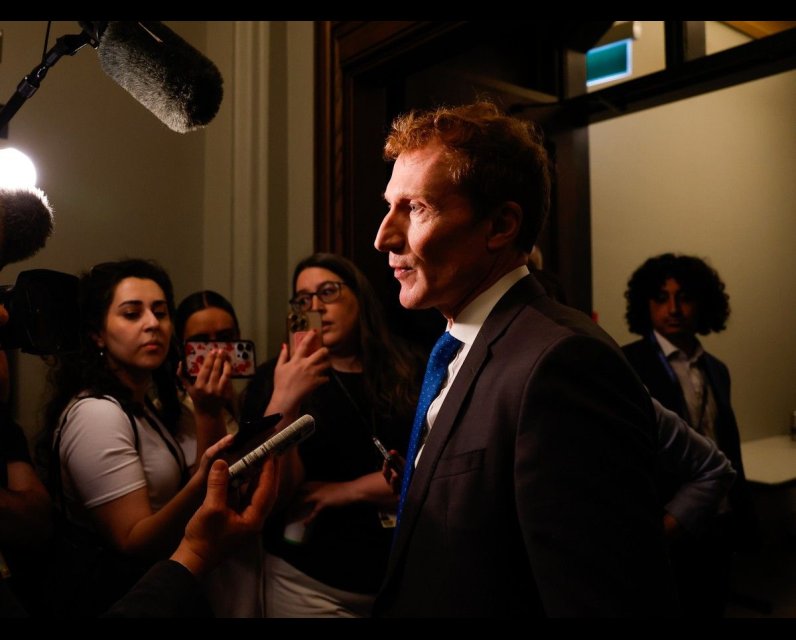
On Wednesday, Culture Minister Marc Miller confirmed the government disagrees with the Canadian Radio-television and Telecommunications Commission (CRTC)’s requirement to raise online streamers’ contribution from five to 15 per cent of their annual revenues.
“We don’t agree entirely with the CRTC’s decision. I will be directing the CRTC to review that decision. And from now until then, we’ll be actually assuming that role and making sure that people actually get the money they’ve been asking for,” Miller told reporters.
The decision was made following consultations on how to implement the Online Streaming Act. The legislation passed in 2023 obliges Netflix and other large streaming services to financially support Canadian content and promote it on their platforms.
In 2024, the CRTC required them to pay five per cent of their annual revenues. But U.S. tech giants such as Apple, Amazon, Spotify and the Motion Picture Association-Canada, which represents the largest American studios, are challenging the order in federal court.
Miller said the ongoing litigation has frozen the funds that were intended to support the cultural sector, and that is why the federal government is stepping in to help.
“The reality is while we’re waiting for that money to come out — hundreds of millions of which are frozen in litigation — the industry is suffering,” he said.
But this announcement is seen by critics as a concession to the United States comes at a time when Canada is preparing to review its trade deal known as CUSMA. The United States Trade Representative (USTR) has already identified the Online Streaming Act as a trade irritant.
“It would be disingenuous to suggest that this is the single issue,” said Miller. “The reality is we’re impatient to make sure that the sector stays vital and stays supported.”
The minister also said affordability is a key factor in the government’s directive to the CRTC.
“We know that in countries, where these types of decisions have taken place, that there are real impacts on production costs, and potential increase in user fees, which are not insignificant for people that have many streaming services,” he said.
“So, affordability is an important aspect of this that shouldn’t be neglected in the discussion.”
That aspect is clearly highlighted in a press release from Canadian Heritage on Wednesday explaining how the government intends to ensure “Canadian content remains affordable.”
“The CRTC’s new requirements would impose new costs on the companies providing these services, which could ultimately fall on Canadian consumers through higher prices,” reads the press release.
“At a time when Canadians face cost-of-living pressure, now is not the time to make culture and entertainment more expensive.”
In the House of Commons, Bloc Québécois Leader Yves-François Blanchet called the directive to the CRTC “another betrayal” for Quebec’s cultural sector.
“After abandoning the digital services tax, Ottawa is once again sacrificing funding for cultural creation by allowing web giants to avoid paying their fair share,” he said.
Prime Minister Mark Carney replied that the decision was rooted in affordability, to avoid Canadians from having to pay more out of pocket for their streaming services.
Conservative MP Rachael Thomas put forward a motion last week to ask cabinet to use its powers under the Broadcasting Act to reject the CRTC’s increase, adding that the cost will be passed on to consumers, will discourage investment and act as a trade irritant.
Thomas was told by Liberals at the time that the government did not have the power to overturn a financial decision according to the Broadcasting Act.
On Wednesday, she did a victory lap. “After nearly two weeks of excuses and trying to mislead the Canadian public, the Liberals are now backpedaling and admitting that the Conservatives were, in fact, correct,” she said.
The chair of the Canadian Media Producers Association, Kyle Irving, said “the federal government has sold out Canadian culture in favour of big U.S. tech interests.”
“If the DST file taught us anything, it is that concessions with nothing in return, only result in demands for more concessions,” he said.
Irving also said dismissed the idea that the federal government will improve affordability by halting the CRTC’s decision, saying that U.S. streamers have consistently raised prices year after year and they will continue to do so regardless of any government action.
“The question we must ask is should US streamers, who’ve made tens of billions from Canadian audiences, also be required to invest in Canadians telling Canadian stories?”
— With files from Jordan Gowling.
National Post calevesque@postmedia.com
Our website is the place for the latest breaking news, exclusive scoops, longreads and provocative commentary. Please bookmark nationalpost.com and sign up for our newsletters here.

Unpublished Newswire



Comments
Be the first to comment