
Stay informed
Unpublished Opinions



Maps shows where Canada Post is converting almost 500,000 more addresses to community mailboxes
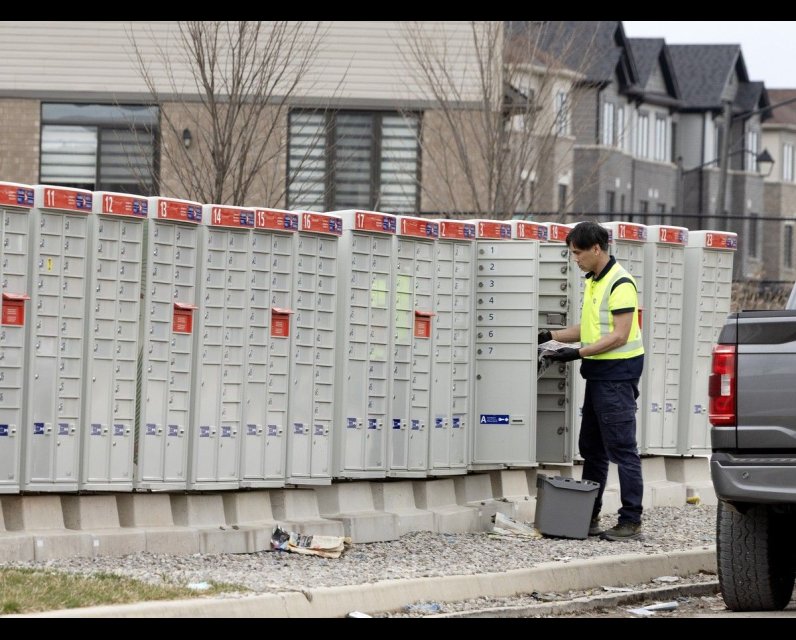
Nearly 500,000 Canadian addresses will lose home delivery as Canada Post forges ahead with conversions to community mailboxes.
In an announcement made on Thursday , the crown corporation said it “is moving forward with community mailbox conversions as part of its broader transformation to modernize the postal service and return to financial self-sustainability.”
In the coming weeks and months, Canada Post will be connecting with 37 communities across the country, the initial stage of converting 485,000 addresses from door-to-door delivery to community mailboxes in 2027. That’s on top of the 136,000 addresses in 13 communities that it previously identified for conversion in late 2026 or early 2027.
In its announcement, Canada Post states that community mailboxes reduce costs as delivery to Canadians’ doors costs “significantly more.” And citing its “deteriorating financial situation” — a substantial loss in 2025 continuing into the first quarter of 2026 — the present state of affairs “underscores the urgency of this transformation,” says the corporation.
Conversions to community mailboxes “are a key element of its plan” to transform the postal service and stop it from becoming “a recurring burden on taxpayers.”
With almost three quarters of addresses in Canada receiving mail via centralized delivery such as community mailboxes, apartment lobby boxes and post office boxes, Canada Post is ultimately converting four million addresses that still receive door-to-door delivery to community mailboxes.
It expects the national initiative to take about five years.
The corporation is now initiating discussions with local governments in several communities across the country about affected addresses, including:
- Halifax, N.S. (17K addresses);
- Fredericton and Ormoctor, N.B. (17K addresses);
- L’Ancienne-Lorette, Laval, Longueuil, Québec City, Saint-Hubert, Trois-Rivières in Quebec (139K addresses);
- Ajax, Brampton, Hawkesbury, Kitchener, London, Mississauga, Ottawa, Pickering in Ontario (158,000 addresses);
- Portage la Prairie, Winnipeg in Manitoba (17K addresses);
- Calgary and Edmonton, Alberta (56K addresses);
- Burnaby, Colwood, Coquitlam, Esquimalt, Kelowna, Langford, New Westminster, Port Coquitlam, Port Moody, Saanich, Songhees Nation (New Songhees 1A), Victoria, View Royal, Westbank First Nation (Tsinstikeptum 10 and Tsinstikeptum 9), West Kelowna in B.C.(81K addresses).
Note that Canada Post says these are approximate numbers.
Canada Post provides a list of the postal codes scheduled for conversion , as well as information about community mailbox conversions. This website will be continuously updated.
Canada Post says it provides support for residential customers who have physical challenges accessing mail and parcels in community mailboxes, with more than 17,000 households across the country currently benefiting from some form of accommodation.
Canadians who need more information about this service are asked to visit Canada Post’s Delivery Accommodation Program .
Our website is the place for the latest breaking news, exclusive scoops, longreads and provocative commentary. Please bookmark nationalpost.com and sign up for our daily newsletter, Posted, here.

Unpublished Newswire


Comments
Be the first to comment