
Stay informed



Haitians eye Canada as U.S. 'temporary protected status' ends
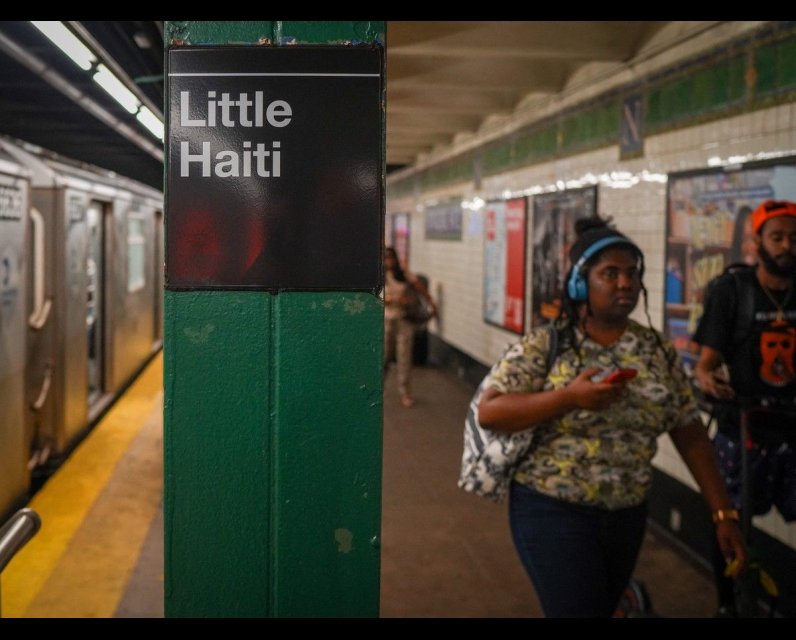
WASHINGTON, D.C. — Many Haitians in the United States, having fled environmental disasters, political upheaval, and gang violence at home, are living in fear again, this time in their adopted country.
Nearly 300,000 Haitians have had Temporary Protected Status (TPS), a relief program established by former U.S. president Barack Obama that provided work authorization, protection from deportation and travel documentation to eligible foreigners whose home countries were deemed unsafe.
The program was repeatedly renewed, but in late June, following a push by Republicans to cancel TPS, the Supreme Court allowed the U.S. administration to proceed with ending Haiti TPS — it expired on July 27. Those Haitians affected fear they may soon face deportation and be sent back to a country largely run by gangs.
Activists and immigration lawyers say this is prompting Haitian ex-TPS holders to consider a move north.
Thierry Jean-Baptiste, a community advocate and representative for the Bureau de la Communauté Haïtienne de Montréal (BCHM), said he is getting more calls from Haitian former TPS holders in the U.S. who want to move to Canada, especially over the past two weeks. He said many are desperate and worried about deportation and job loss.
“It’s a nightmare for them,” he said. “They’re very stressed.”
American immigration lawyers, meanwhile, are seeing that nightmare play out from the other side of the border .
“Many people are asking about Canada,” said Marina Shepelsky, a New York-based immigration lawyer who says she hates how this is affecting her clients. “I’m constantly feeling like I’m in some kind of war.”
Official data on Haitian visa requests for Canadian travel, attempted entries and asylum requests in response to this crisis won’t be available until later this year, but immigration professionals in Canada already see signs of an uptick.
Like Jean-Baptiste, Cassandra Fultz, founder of Doherty Fultz Immigration and a regulated Canadian immigration consultant based in Ottawa, says her office has seen an increase in inquiries since the Supreme Court decision.
“It’s inquiries in general for visas, for work permits, for permanent residence. Just options. Even asylum. When we speak with anyone, we evaluate all their options,” she said, noting that calls are up by about 20 per cent in recent weeks.
Before considering a third country, of course, many TPS holders are assessing their options for staying in the U.S., and the options are not great.
The termination is pushing many Haitians into claiming asylum in the U.S. — which many had not done before because TPS protected them. Some are also looking at T-visas (temporary immigration benefit for victims of human trafficking) and SIJ (Special Immigrant Juvenile) options, but those apply to a narrower group. Others can also still pursue a green card through marriage or another qualifying family route, according to Ahmad Yakzan, a Florida-based attorney specializing in immigration. But for many, those paths are blocked because of how they entered the country: without inspection.
That leaves asylum as one of the main remaining legal paths, Yakzan said, cautioning that it is not a good safety net because it is now tougher to meet U.S. asylum standards. The Trump administration has taken a harder line on gang- and private-actor-based claims.
Asylum denials have soared, with the government taking a harder line on claims involving gangs and other private actors, and moving more quickly into removal proceedings.
“They’re denying 99 per cent of cases,” Yakzan said. “They’re not even going to meet you before you get placed in removal proceedings.
“In the long run, there are people who are SOL … we’re trying to look for other relief, but the problem is most of them came without inspection, and we can’t really do anything for them.”
Yakzan and Shepelsky stressed that Haitians who have lost TPS status should first speak with a qualified immigration lawyer to assess their options, but they took different views on whether leaving for Canada might be a good option.
Yakzan says it is better to stay in the U.S.
“It’s much harder to bring them back than fighting here,” he said.
But if, after speaking with a lawyer, one’s options are poor, Shepelsky encouraged a look north.
“Consider Canada. Consider wrapping up your affairs here in America,” she said.
Holding out for political and policy changes — or a reversal — may not be prudent. Legislatively, the U.S. House of Representatives passed a Haiti TPS extension bill in April, and Senate Democrats introduced companion legislation in June. But the Senate has not yet brought it to a vote — and even if it passed, the White House would likely veto it.
“In the States, I think people have run out of road at this point,” said Fultz, noting that Haitians, perhaps more than other nationalities, do have options when it comes to living in Canada.
When asked about realistic Canadian immigration pathways for Haitian TPS holders, she said there are several.
“Honestly, it’s kind of the ultimate silver lining for people who are on TPS and who are Haitian … the door is really wide open for them and any other French speaker.”
The strongest pathway, she said, is Express Entry, especially the French-language category, but Canada also has newer Francophone-focused routes, such as the Francophone Student Pilot and a Francophone Community Immigration Pilot. She also mentioned health-care pathways, noting that many former TPS holders work in the medical field in the U.S.
These economic immigration programs can be applied for from anywhere in the world, but they can take months, if not years, for invitations and processing. Jean-Baptiste said it’s likely too late now for the former TPS holders to apply to such programs, but Fultz said Haitians in fear of being sent back to Haiti could look into options for visa-free travel in the meantime (Haitians can travel visa-free to a limited number of countries). Many, however, have lost their jobs in the U.S. as a result of their status change and may not have the funds for extended visa-free travel.
Being desperate to avoid deportation can prompt migrants to act quickly, and Jean-Baptiste said he has already seen some with family members coming to Canada to claim asylum. But heading to the border comes with risks.
First, many Haitians coming from the U.S. may be ineligible to claim asylum at the Canadian border because of the Safe Third Country Agreement (STCA), and they could be turned back to the U.S. the same day, where they risk being detained — and potentially deported.
Haitians who qualify for an exception to the Canada-U.S. Safe Third Country Agreement — including those with a qualifying family member in Canada — may be able to make a refugee claim at a Canadian port of entry, but proving the family link can be difficult.
For those who don’t qualify for an exception, it may be tempting to try to enter Canada irregularly and later seek asylum. But the Safe Third Country Agreement and Bill C-12 have made the path much harder, and people who cross between ports of entry may face serious legal obstacles, according to Julia Sande, a lawyer with Amnesty International Canada.
Sande warned that those who cross into Canada between ports of entry and wait more than two weeks may end up in legal limbo, which she described as being able to work but not having a realistic path to permanent residence.
“The good news is Canada’s not trying to return you, but the bad news is you’re stuck in legal limbo indefinitely,” she said.
“It’s like a bad board game where no matter what you do, you end up in a bad situation.”
National Post
Our website is the place for the latest breaking news, exclusive scoops, longreads and provocative commentary. Please bookmark nationalpost.com and sign up for our newsletters here.

Unpublished Newswire



Comments
Be the first to comment