Trust in the news has eroded at a startling pace, with Americans' confidence in the mass media stooping to a new low of 28%. According to James O'Grady, founder of Unpublished Media, the audience once relied on established outlets as the primary lens through which they could understand the world; now, he believes that skepticism defines that relationship. Digital platforms like social media have become the go-to news source for about a fifth of people in each country, with AI chatbots projected to rise as the next source of credible information.
O'Grady believes that this shift has fragmented audiences, pulling people into ideological corners, narrowing the flow of information, and reinforcing online echo chambers. This breakdown in shared understanding is the backdrop against which Unpublished emerged.
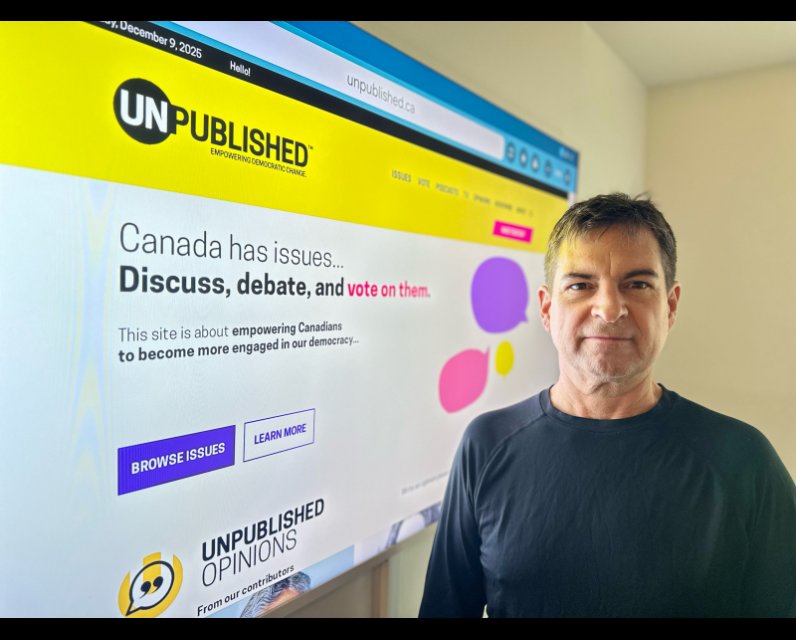
O'Grady envisioned a space not shaped by political divides or investor-driven agendas, but by the belief that people deserve a place to connect with each other meaningfully. "In the absence of trustworthy, civil dialogue online, the need for platforms that support participation instead of polarization is crucial," he says.
Designed as a neutral environment, Unpublished welcomes multiple viewpoints and encourages users to contribute through articles, commentary, multimedia, and peer-to-peer conversation. It blends curated information from diverse news sources with user-generated insights, creating an ecosystem where the public can explore issues from many angles rather than being fed a single narrative. O'Grady believes this multidimensional approach can give audiences the context they need to form their own judgments instead of feeding into existing bias.
"But a platform built around dialogue alone cannot generate the long-term influence needed to shift media culture and public policy," he says, highlighting the need for meaningful impact. To achieve sustainability with scale, Unpublished introduced an Electric Customer Relationship Marketing (eCRM) architecture. This integration, he notes, allows Unpublished to function like a next-generation loyalty program. "We take a client's existing database, grow it, and in doing so, build loyalty around the brand," he explains.
O'Grady believes this model can deepen relationships between publishers and their audiences by creating a two-way flow of value. Users can contribute insight and feedback, while the platform rewards participation by making their voice more visible and impactful.
According to O'Grady, the eCRM framework allows Unpublished to grow organically, building communities around shared interests, strengthening engagement, and fostering loyalty through meaningful interaction. Instead of distributing content to passive recipients, he notes that publishers can use Unpublished to involve real people in real processes, polling them, gathering sentiment, inviting decision-shaping responses, and potentially enabling them to communicate directly with policymakers on important matters.
Now that this foundation is in place, Unpublished Media stands ready for its next evolution. O'Grady emphasizes that the platform's architecture was intentionally designed to integrate seamlessly with major news organizations and digital publishers.
"It is effectively plug-and-play. A media company could bolt Unpublished into its existing ecosystem and gain a more dynamic viewership," he says, noting how this integration can empower media companies with tools that encourage constructive dialogue.
O'Grady believes this integration could help outlets regain the audiences they have lost. "People who feel overlooked or unheard could become active contributors again," he says. According to him, publishers can gain insights driven by real people instead of impersonal data brokers, access a steady stream of opinion pieces, discussion threads, and audience-led narratives that reflect the concerns of their actual communities. "The platform's structure can allow publishers not only to listen but to respond. Our goal is to close the gap between the newsroom, the policymaker, and the citizen," he says.
In 2026, Unpublished will launch a dedicated mobile application to enhance its mission of democratizing the platform, offering a more inclusive and accessible media experience for a global audience.
According to James O'Grady, the future of news hinges on a collective choice: accept the decline of conventional news media or evolve them with tools that could revive the core mission of journalism, one that lies in empowerment and education. Unpublished aims to demonstrate how that evolution can happen by offering a path toward rebuilding trust and reconnecting people with the information and institutions that shape their lives.
"The idea is to educate people on what's going on, not by providing one source of information, but many," he says. "And in that process, we aim to change the narrative, where constructive conversation is possible and still powerful when people are given the space to engage."
Unpublished Media is seeking a domestic and/or international partner to expand its reach in Canada and around the world.




Comments
Be the first to comment