

Unpublished Opinions
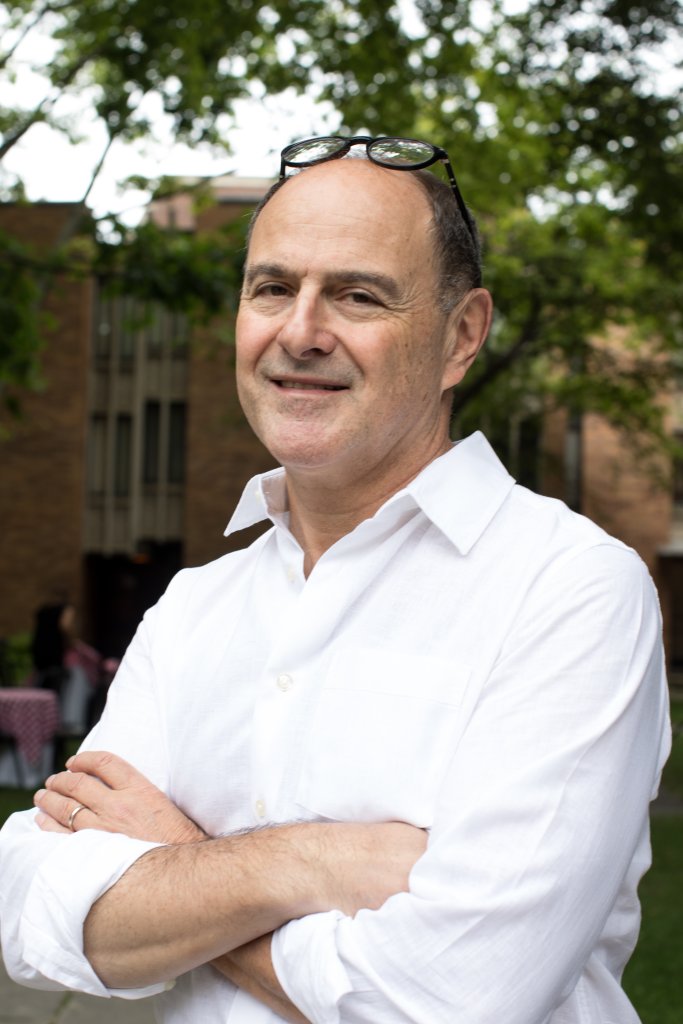
Peter L. Biro is the founder of democracy and civics think-tank, Section 1. He is a Senior Fellow of the Raoul Wallenberg Centre for Human Rights, the Aristotle Foundation and Massey College, Professional Associate at the UBC Research Group on Constitutional Law and Legal Studies, Chair Emeritus of the Jane Goodall Institute, and Adjunct Professor in the Henry N.R. Jackman Faculty of Law, University of Toronto where he teaches constitutional law. Peter has published extensively on matters of law and politics. His latest book is Imperfect Ideal: Essays on Liberal Democracy in the Real World (forthcoming from Dundurn Press).
CANADA’S ACTIVIST ACADEMY AND THE RISE OF ANTI-ZIONISM
Occasionally, one’s lived experience is more than a simple personal story and is, instead, a paradigmatic example of a pervasive and hugely consequential societal malaise.
My recent decision to resign from senior fellowship in one of Canada’s finest and most venerable institutions following its establishment of a committee to supervise, curate, and “approve” my conference, “Antisemitism in Our ‘Free and Democratic Society’: A Canary’s Song,” offers up just such an opportunity. The institution is the University of Toronto’s Massey College.
The malaise is the replacement of truth-seeking by activism as the overriding mission of the academy. The most alarming indication of that malaise is the meteoric rise of anti-Zionism and its transformation from an ancient into a modern hatred—a transmutation—that has become both an established social science paradigm and comprehensive ideology.
Information warfare overthrows the marketplace of ideas
Societies throughout the West have become severely polarized—ideologically, politically, economically, socially, culturally, and cognitively. One acute type of polarization—epistemic polarization—however, is critical to the future of our democracy. It goes to the root of the most fundamental enterprise for any society committed to government guided by the consensus of free and equal citizens. That enterprise is the search for truth and the growth of knowledge, without which societal cooperation is achievable only through coercion or manipulation.
Societies, and in particular liberal democratic societies, have always grappled with internal contests over competing political agendas and conceptions of social justice. But those contests had traditionally been waged on the terra firma of consensus on the essential facts.
No longer.
Today, a perpetual, all-consuming cage-match of info-wars has co-opted the enterprises of research, truth-seeking, and teaching in Canadian schools and universities. In that cage-match, fact is whatever the victors say it is.
From critical theory to the activist academy
We have known from the earliest days of the 1930’s Frankfurt School that the enterprise of theorizing had incorporated into its critique of capitalism, fascism, and mass culture, the advancement of the cause of social, political, and economic emancipation. This school of thought gave rise to what has come to be known as “critical theory,” which aims not at providing a dispassionately descriptive account of the existing social order, but at operating as a transformative force designed to expose and overthrow the underlying power structures within that existing social order.
Today, critical theory—with notable spin-offs such as critical feminist theory, critical race theory, and intersectionality—is so pervasive in the Canadian academy that it transcends the realm of theorizing. It has now become a system of scholarship and the dominant ideology of the age.
As the predominant academic paradigm, most evidently in the humanities and social sciences, critical theory’s activist imperative and its core premises concerning the nature and origins of power, oppression, and social structure, have transcended the walls, gates, and ivory towers of the academy and now permeate popular discourse, corporate and human resources management culture, human rights jurisprudence and, not least, politics and public policy.
The activist mission baked into the critical theory framework from its birth is not news. The inescapably corrupting influence that it would have on the truth-seeking academy was foreseeable. But, as the recent joint Vanderbilt-Washington University Report on the State of Scholarship in the Humanities and the Humanistic Social Sciences lays bare, only now are we seeing the full epistemic and societal consequences of that activist mission for our contemporary understanding of truth—of what we call facts.
Anti-Zionism: The virtuous ideology
In no contemporary context has this phenomenon been more flagrantly in evidence than in the social science scholarship and human rights advocacy and activism ostensibly pertaining to Israel-Palestine, and given fullest expression in the ideology of “anti-Zionism.”
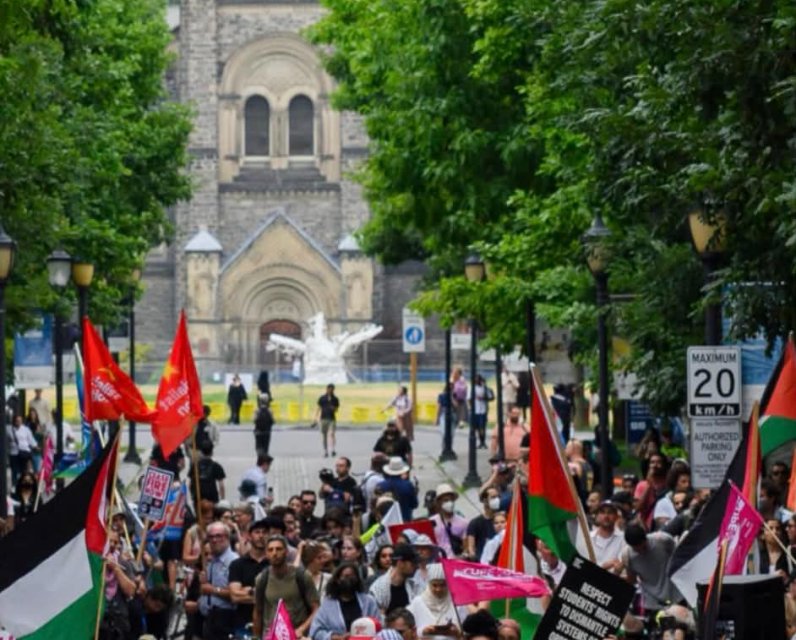
In the immediate aftermath of the Oct. 7, 2023, pogrom, the phrase “Resistance by any means!” became one of the favoured slogans of the pro-Palestine/anti-Israel movement. In the rush to “contextualize” the atrocities of Oct. 7, many in the universities and in the NGO sector sought to reframe them as a justified response in an “asymmetric struggle.”
They cast the Hamas-Palestinian Islamic Jihad atrocities as resistance not only to a longstanding brutal Israeli “occupation,” but to the very founding, in 1948, of an “illegitimate” nation state by a “settler-colonial” group of “racist invaders” and “occupiers” who fraudulently laid claim to Palestine as an indigenous Jewish homeland, thereby dispossessing the Palestinian inhabitants of their own homes and lands.
This narrative, which has come to be codified in the word “Nakba”—Arabic for “catastrophe”—has advanced the cause of Israel demonization and done wonders for the cause of virtuous antisemitism, that peculiar type of contempt for a people that, as a matter of decency and good manners, is almost de rigueur. But it has done little to advance the cause of human rights or to improve the lives of Palestinians in Gaza and the West Bank.
“Resistance by any means” now includes the proclamation of facts by any means. Israel vilification has become the currency and cornerstone of contemporary international human rights discourse and it is apparent that there is now an all-hands-on-deck effort, in the academy as in the broader civil society sector, to ensure that only the most incriminating, though contested, facts about Israel’s historical and current policies and actions figure as prominently as possible in any account, reporting, or analysis of its politics and history.
What matters is not the accuracy or integrity of the facts, but their instrumentality in validating a particular historical and legal narrative. That narrative is one that depicts the Jewish people as settler-colonizers and occupiers, and that charges the Jewish state with the crimes of expulsion, ethnic cleansing, occupation, apartheid, and—the Holy Grail of charges—genocide.
What is problematic here is not the notion that Israel, like every other nation-state, ought to be held accountable for its actions under domestic and international law. It is rather that the activist imperative that largely informs the practice of humanities and social science research has given rise to a scholarship that serves the cause of “social justice” advocacy rather than of disinterested—i.e., neutral and impartial—inquiry and investigation.
A noble motto perverted
And so, even when the subject at hand was antisemitism in its modern-day transmutation, anti-Zionism, Massey College was not content to allow a group of Jews to be unsupervised in their effort to educate the community, to explain the phenomenon, and to tell their own story.
No matter that this group of Jews includes world-renowned experts, leaders, and public servants. No matter that the program explicitly commits the proceedings to the enterprise of striving “for understanding rather than for activism, and for moral clarity rather than moralizing.” No matter that its stated aim is to “consider our societal responsibility for the escalation of the scourge of antisemitism, and to understand the stakes both for the Jewish community and for liberal democracy if we fail to reckon with it.” No matter that the conference—which will now be convened in Toronto on September 15at the Beth Tzedec Congregation, and which will be presented by the Raoul Wallenberg Centre for Human Rights and the Aristotle Foundation for Public Policy—intends to examine and elucidate Jew hatred and not to litigate the Israel-Palestine conflict, the humanitarian catastrophe in Gaza, or the laws and politics of the conflict or the region.
A sizable portion of Canadian society is utterly oblivious to the fact that our current age represents the next great transmutation of Jew-hatred in human history. The first iteration of antisemitism was religious—conceiving of Jews as Christ killers, from the time of the Romans right up until the Crusades and the Spanish Inquisition. The second was racial and biological—seeing Jews as subhuman and as vermin, culminating in the Holocaust. The third, and current, iteration is ideological—expressing itself in the language of anti-Zionism and viewing Jews as powerful oppressors, invaders, and settler-colonizers.
Anti-Zionism is the ne plus ultra of contemporary progressive ideologies, for it is the offspring of the world’s oldest hatred and the academy’s favourite contemporary paradigm. Their contempt for Jews is implicit and largely unacknowledged. And it manifests in ways that confer plausible deniability to the charge. But when one examines the logic of the underlying critical theory paradigm, it is impossible to deny the contempt.
Unfortunately, the activist mission predominates at Massey College as it does throughout the Canadian academy. The human rights agenda plays an outsized role in institutional programming because it reflects the academy’s essential emancipatory mission. The college’s own mission, “To nourish learning and serve the public good,” is used to express our overriding interest in the growth of knowledge. But today, “the public good” is a euphemism for “social justice.” And there is almost certainly no social justice mission more fully embedded in the sensibility and scholarship of the activist academy than that of anti-Zionism.
The UN Special Rapporteur on the “Occupied Palestinian Territories,” Francesca Albanese, implied that “we as a humanity have a common enemy” in Israel and in the system that supports it. This provides fodder to Israel’s status as a pariah state. Albanese demanded action from the international community, but she was not calling for Israel merely to be disciplined or punished, but to be removed altogether from the community of nations, thereby also making “common enemies of humanity” of those who identify with or are identified with Israel.
But anti-Zionism is not, as it is commonly described, a form of legitimate criticism of Israeli politics, practices, or leadership. It is a movement predicated on the belief that Israel is, and was from the start, an illegitimate state, and, more fundamentally, that Zionism—the Jewish aspiration for self-determination in an indigenous, biblically prophesied homeland—is an evil enterprise with colonialist, racist, and genocidal motivations. And so, if Israel, the Jewish homeland, is a pariah state, it is axiomatic that Jews are a pariah people.
This is the essence of anti-Zionism. And it is the aim of my conference to expose and explain the hateful character of anti-Zionism and to reflect on what the prevalence of this ideology in the ranks of our human rights establishment and of our social sciences and humanities scholars says about the state of liberal democracy in Canada and throughout the West.
That Palestinian voices should be heard is not remotely objectionable or even controversial. That human rights grievances must be exposed and that corresponding political and legal accountability must result are givens. But what, one must ask, could the rationale be for wanting, as some in the university did, to include those sorts of divergent and critical perspectives in a conference about the nature and societal implications of antisemitism? What reason might there be to honour and conform to an institution’s “mission and approach” by such measures if not to provide at least some plausible explanation—not to say, justification—for the fact that Jew-hatred is all the rage?
For each type of undertaking there is a corresponding forum. Public education—be it in a high school, university, or taxpayer-funded public museum—must be non-partisan, politically neutral, socially and morally responsible, and, above all, truthful.
Our academy—which, in the broadest sense, includes all of our institutions of research, learning, and teaching—has succumbed to what the Vanderbilt Report describes as “a distinctive form of politicization in which the scholarly enterprise is taken to be subordinate to, or in the service of, political (social or moral) goals beyond the advancement of knowledge and understanding.”
In a world in which activism has supplanted truth-seeking as the overriding mission of the academy and the spirit of the age, we would do well to heed the late Christopher Hitchens’ admonition to be wary of taking refuge in the false security of consensus.
Peter L. Biro is the Founder of Section 1, Senior Fellow of the Raoul Wallenberg Centre for Human Rights and the Aristotle Foundation for Public Policy. He is Adjunct Professor at the Henry N.R. Jackman Faculty of Law, University of Toronto where he teaches constitutional law. His latest book is Imperfect Ideal: Essays on Liberal Democracy in the Real World (Dundurn Press).
References

Comments
The struggle has been real for as long as I can remember. Most outsiders are sick of it.
The pogrom is the extinction of Gazans...the force used, patently obscene.
Oct.7? Yes, that too was obscene
So, there you have it, matching obcenities.
Now what? With this eye for eye strategy?