IHCMD vs. Traditional Approaches to Rising Mental Health Problems and Mental Health Care Costs | Unpublished
Hello!

Unpublished Opinions

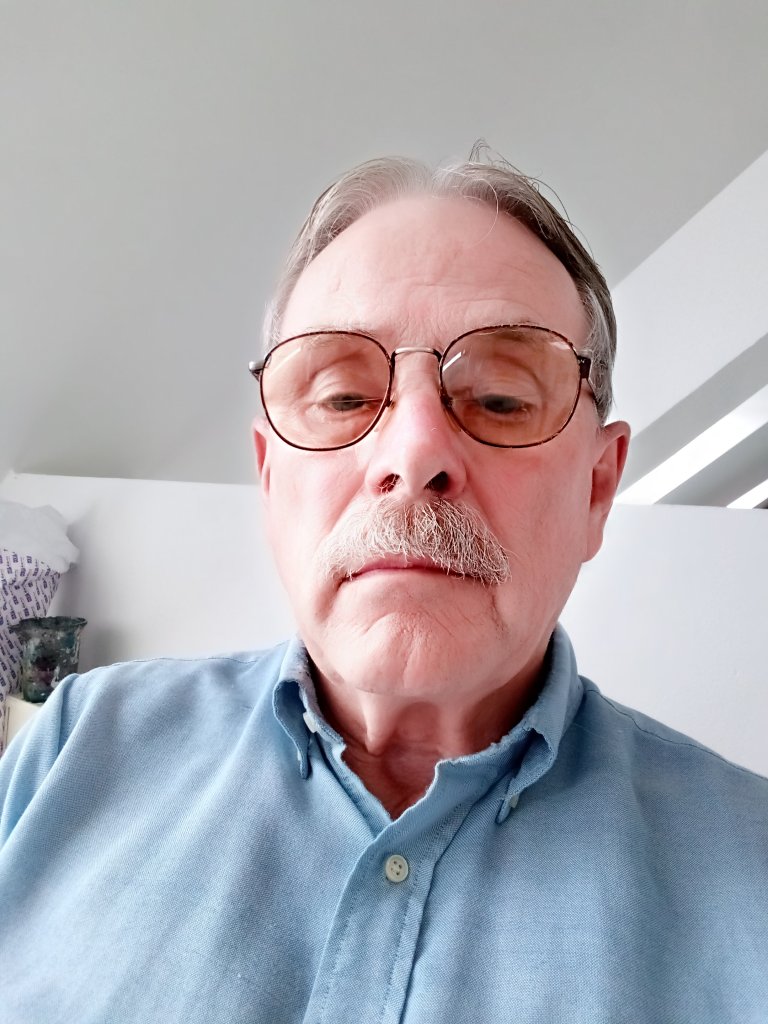
Axel Dorscht's picture
Ottawa, Ontario
About the author

Axel Dorscht is the founder and head of the Institute for Human Conceptual and Mental Development (IHCMD). He has directed the Institute's work since its founding in 1990. He holds a PhD in political economy (Carleton University, Ottawa, Canada, 1988), an MA in International Relations, and a BA in Political Science (Simon Fraser University, Vancouver, Canada, 1977 and 1975).

Since 1990, he has been involved in two major studies: one to understand the mind on the inside, as the place where we consciously exist and act, where the inner mental life takes place, and where the mental self is active. Understanding the nature, elements and processes, the conditions, needs, demands and challenges of the mind, our inner mental life and the mental self, our role and responsibility in them, how to manage and deal with them, in their essence, in depth and detail, in a differentiated, but integrated, connected and related way.

The other study examines the historical path and direction of human conceptual and mental self-development. How, through the ages, human beings have made sense of their experience, the conditions of existence that lie behind them, and how to deal with them. The mental powers and abilities, mental skills and practices they developed, on which they relied, how they developed and used them, which lie behind, define and govern socio-cultural developments that have brought the human species to where we find ourselves today and the problems and difficulties we face and create. The direction of the answers and solutions, the direction we need to take in conceptual and mental development and growth, individually, as societies and as a species, to understand and manage existence and development in sustainable, equitable, secure and peaceful ways. Together, the two studies provide the conceptual foundation and framework for the Institute's work.

Starting in 1996, he has hosted a series of Online workshops, summer schools, study and training programs, and on-the-ground lecture series about sustaining existence and development in changing conditions, understanding and managing them from the ground up and from the inside out, beginning with the mind and mental existence.

Before the work with the Institute for Human Conceptual and Mental Development, he has worked as a consultant in international development (IDRC and CIDA, 1988-92), as a professor and lecturer in political science, Carleton University (Ottawa, Canada), University of Ottawa (Ottawa, Canada) and St. Francis Xavier University (Antigonish, Canada, 1983-87), as a free-lance correspondent in Germany (for the Financial Post, Canada, 1981-82), and as a researcher in political, social and economic development (in Canada and Europe, 1980-82).


Like it

IHCMD vs. Traditional Approaches to Rising Mental Health Problems and Mental Health Care Costs

April 17, 2026

Despite significant investment, mental‑health problems and associated costs continue to rise. Traditional systems focus on treating symptoms after they appear. IHCMD (Institute for Human Conceptual and Mental Development)  proposes a developmental approach that addresses the underlying causes that generate mental‑health vulnerability and long‑term system pressure.


Background

  • Traditional mental‑health systems are built around clinical diagnosis and treatment, emphasizing symptom reduction, stabilization, and functional recovery.
  • These systems attribute rising problems to factors such as stress, trauma, social determinants, and increased diagnostic awareness.
  • IHCMD identifies rising mental‑health problems as the result of underdeveloped internal mental capacities, including weak self‑management, fragmented understanding, and lack of conceptual coherence.
  • The Institute’s approach focuses on qualitative mental growth, strengthening the internal architecture of understanding and shifting individuals from externally managed to internally self‑managed mental lives.


Comparison: Traditional vs. IHCMD Approaches

Traditional Systems

  • Focus: Alleviate symptoms after onset
  • Methods: Therapy, medication, crisis intervention, behavioural programs
  • Assumptions: Problems arise from external stressors or clinical disorders
  • System Logic: Reactive, service‑delivery model
  • Outcome: Demand grows continuously; long‑term costs escalate

IHCMD

  • Focus: Address root developmental causes before symptoms emerge
  • Methods: Conceptual‑development modules, internal self‑management training, strengthening meaning and coherence
  • Assumptions: Problems arise from underdeveloped mental and conceptual capacities
  • System Logic: Proactive, developmental model
  • Outcome: Reduced vulnerability, fewer problems, long‑term cost reduction


Analysis

Traditional systems operate downstream, treating the outcomes of weak internal development. This creates a cycle of rising demand and rising cost.
IHCMD operates upstream, strengthening the internal conditions that determine mental‑health resilience. By developing conceptual clarity, coherence, and internal control, IHCMD aims to reduce creating mental‑health problems, thereby lowering long‑term system pressure and cost.



References


Comments

April 18, 2026

Do you have a report or studies to go along with this summary? Add them as PDFs or in the reference section near the bottom of the form.