

Unpublished Opinions

Clinton is an accredited writer for numerous publications in Canada and a panelist for talk radio across Canada and the United States
Missing Scientists, Fusion and Gravity : Investigating the Jeffrey Epstein Connection
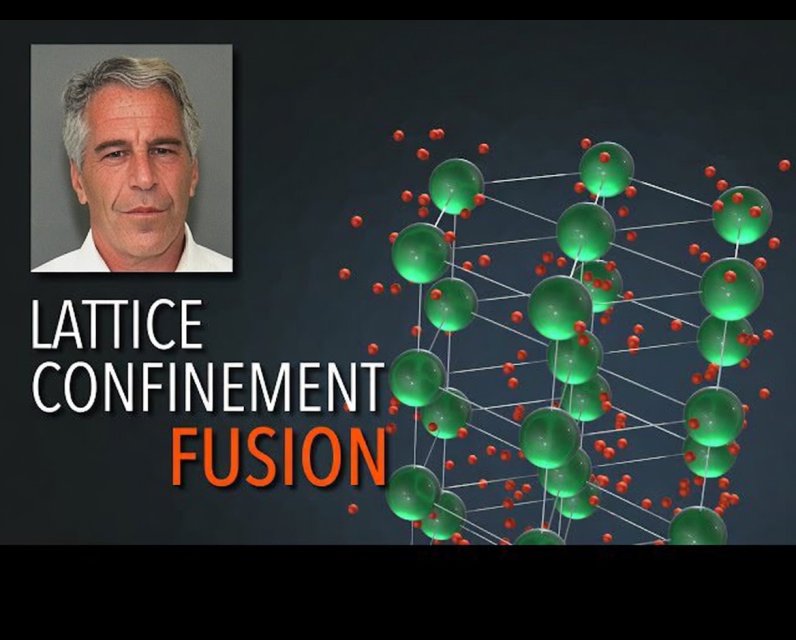
The following sounds like a James Bond Hollywood blockbuster film, but it was real life.
In an October 1, 2009, email, Jeffrey Epstein made a bold claim to Alfred Seckel, a scientist then based in Malibu, California. Epstein informed Seckel that he had “killed” Stanley Pons years earlier.
This statement was not a literal confession of murder, but rather a boast about successfully lobbying against U.S. Congressional Senate funding for cold fusion research between 1989 and 1990.
It was, in effect, a declaration that he had rendered Stanley Pons scientifically irrelevant. This was never about open scientific debate or the pursuit of truth - it was a calculated act of suppression.
To put this in context, the era was defined by the presidencies of Ronald Reagan and George H.W. Bush, marking the conclusion of the Cold War.
As part of his efforts, Epstein met with the head of the Mormon Church. He also met with Wayne Owens, a U.S. Representative from Utah, and other Republicans at the time. Owens, a member of the LDS Church, was a key figure in political discussions about funding for cold fusion. It seems that in Utah, physics always takes a backseat to religion.
INTERNATIONAL NEWS BREAKS
Now, we go back twenty years in time - from October 2009 to March 23, 1989. At the time, Stanley Pons was the chairman of the chemistry department at the University of Utah. It was then that he and his colleague, Martin Fleischmann, announced the experimental production of cold fusion.
Stanley Pons, an American chemist, rose to international prominence in 1989 alongside British chemist Martin Fleischmann. The pair announced they had achieved a potential roadmap to nuclear fusion at room temperature using palladium electrodes in heavy water. Had their claims held up, the discovery would have fundamentally transformed how energy is produced and potentially devastated the global fossil fuel industry and created a massive geopolitical security headache.
Cold fusion (or LENR) was widely discredited after 1989 because independent replications failed to produce “consistent” excess heat from the experiment.
The argument at that time was that no accepted theoretical mechanism existed within “known physics”
Pons maintained that their experiment “worked,” explaining that his team had detected anomalous heat - the system produced more energy than could be accounted for by conventional chemistry. The “why” was secondary to the observable fact that something extraordinary had occurred.
The experiments generated a strange heat signature that defied easy explanation, yet yielded intriguing and sometimes repeatable results.
Stepping outside the comfortable boundaries of the Standard Model and General Relativity, the swift dismissal of cold fusion begins to look less like a scientific failure and more like a failure of imagination within the broader scientific community.
THE EXPERIMENT
Proponents of Fusion argue that the Palladium lattice acts as a catalyst that the Standard Model - which largely calculates particle interactions in a vacuum or high-energy plasma - is not designed to simulate. When deuterium atoms are forced into the microscopic gaps of a palladium crystal, the lattice doesn't just hold them; it creates a "crowding effect."
Within this lattice, the electrons are shared in a sea of conductivity, potentially "shielding" the natural repulsion between nuclei. Furthermore, the collective vibrations of the lattice atoms (phonons) may provide the necessary energy to overcome the Coulomb barrier in ways that the "playpen" of standard particle physics simply doesn't account for.
By ignoring the role of the lattice, the scientific community didn't just dismiss an experiment; they dismissed a unique state of matter. This allowed the gatekeepers to label the excess heat as "impossible," despite the fact that the math they were using was never meant to describe the interior of a pressurized metal crystal in the first place.
Pons later relocated to France to continue his cold fusion research, but the program was abruptly shut down without conclusive disproof.
When a chemical reaction produces effects no one fully understands, it should signal the presence of new physics worthy of rigorous investigation - not immediate dismissal. Yet because the results did not neatly fit within the prevailing framework of General Relativity and quantum mechanics, cold fusion was consigned to the trash bin of history.
THE PROBLEM
Epstein had meetings with leaders at Brigham Young University, a key institution involved in Pons’ research. While the Standard Model of physics describes the subatomic world and General Relativity explains gravity on cosmic scales, the two frameworks remain notoriously incompatible. Cold fusion challenged that comfortable divide, suggesting the traditional models might be incomplete and that new phenomena were waiting to be discovered.
When a figure like Jeffrey Epstein - positioning himself as a “science broker” with apparent backing from intelligence interests - enters the arena, we arrive at the well-worn road of suppression.
ACQUISITION & GATEKEEPING
Jeffrey Epstein’s property in New Mexico was known as Zorro Ranch, a sprawling 10,000-acre compound located near Los Alamos, New Mexico, in the United States. It was strategically positioned to be within reach of the physics community found at Los Alamos Labs.
When the Cold War ended, the existential pressure that had fueled massive government spending on physics at labs like Los Alamos (LANL) and Sandia began to dissipate. This led to budget cuts and layoffs. Programs that were once "blank check" priorities suddenly had to justify every penny to a Congress and Senate looking to trim the deficit and roll back the role of government.
By purchasing Zorro Ranch in 1993, Epstein placed himself in the physical center of this uncertainty. He wasn't just offering money; he was offering a haven. A haven he gatekept.
There was a genuine fear in the intelligence community that underpaid or unemployed scientists (both in the former USSR and the US) might sell their expertise to rogue states or non-state actors.
As public funding dried up, physicists, the very people who ended World War 2, invented jet aircraft for you to vacation on, put a man on the moon, gave you colour television, and the modern automobile became increasingly reliant on private philanthropists and venture capitalists to keep their important research alive.
Epstein didn't just buy a ranch; he "bought" access. He was known to host prominent theoretical physicists at his dinners. Epstein and those he worked for saw an opportunity to keep science funded in the back channels - and out of the hands of questionable geopolitical threats - hence the gatekeeping.
HISTORY LESSON
On August 6, 1945, in Hiroshima, Japan, at 8:15 AM, the power of physics was put on full display for all of humanity to witness as the atomic bomb was detonated. Civilization had entered a period where scientific knowledge had to be gatekept. There was a growing sense that the power of physics would expand in unusual ways if not monitored, kept in check, and moved away from the "town square" of society.
The detonation at Hiroshima didn’t just end a war; it ended the era of the "gentleman scientist" sharing discoveries for the sake of pure knowledge. The gatekeeping was famously described in late 1945, when Robert Oppenheimer acknowledged that physics had moved from the "town square" into a darker, more restricted room:
"In some sort of crude sense which no vulgarity, no humour, no overstatement can quite extinguish, the physicists have known sin; and this is a knowledge which they cannot lose."
During the 1950s, numerous physicists in academia and aerospace engineers in the private sector were openly researching gravity manipulation; some voices in the security apparatus believed this research should be shepherded away from the dangers of the public eye.
CARROT & STICK
By 1951, there was recognition that the intersection of national security and theoretical physics was a problem. If you could create a "black hole" where revolutionary ideas could disappear, meaning physics could at last be managed.
This is why the Invention Secrecy Act of 1951was created - the United States government would now maintain the legal authority to intercept human progress at the patent office. This act functions not just as a bureaucratic hurdle, but as a legal "iron curtain" used to sequester transformative human technology from the public domain.
As of fiscal year 2025, the United States government maintains approximately 6,543 active secrecy orders under the Invention Secrecy Act. While the total number fluctuates, the trend is climbing; new orders jumped from 61 in 2021 to 102 in 2025. Typically, these gags are sponsored by the Department of Defense or the Department of Energy - the gatekeepers of what we are "allowed" to know. Of the 6,543, roughly 90% were implemented by the Department of Defense and 10% by the Department of Energy.
If you’re a physicist studying a Grand Unified Field Theory, gravity manipulation, or fusion energy in the U.S., even whispering about helix fields or torsion physics could get you flagged. It’s not necessarily because your math or facts are wrong; it’s because it’s disruptive.
The Act doesn't require proof of a weapon; it only requires a bureaucrat to decide that the discovery is "disruptive." The penalty is two years in prison for disclosure, or twenty years if they can frame it as espionage. That is how they keep the lid on. The inventor is legally gagged: no talking, no publishing, and no foreign filing or public requests for funding.
So the question was asked: how to sequester before something is known to the general public?
Legal gags are merely the "stick." The "carrot" is a more sophisticated capture of the world's leading minds. To understand how advanced physics can be effectively strangled at the university level, one must look at the Maxwell family’s roots in scientific publishing.
This influence traces back to Robert Maxwell, who pioneered the profit-driven model of scientific publishing at Pergamon Press. In 1951 - the same year the Invention Secrecy Act was formalized - Maxwell acquired a controlling stake in Butterworth-Springer. By turning academic journals into a high-stakes commercial enterprise, Maxwell created a gatekeeping mechanism that persists today. His daughter, Christine Maxwell (sister of Ghislaine Maxwell), is married to Roger Malina, a prominent figure in the world of physics peer review and astrophysics.
New documents released in early 2026 reveal that Jeffrey Epstein was actively involved in the "pre-publication" phase of research at Harvard’s Program for Evolutionary Dynamics (PED). This allowed a non-scientist to influence the final polish of peer-reviewed work, ensuring disruptive technologies like zero-point energy and gravity manipulation remained "fringe" or were steered toward private interests.
When an "intelligence apparatus" or commercial monopoly exerts influence over the journals, they no longer need a formal secrecy order to kill a discovery; they simply refuse to deem it "credible." By controlling the "carrot" of publication and prestige, they ensure that any physics challenging the status quo - such as the "anti-gravity" concepts teased at the 1957 Chapel Hill Conference - remains buried in the graveyard of "fringe science."
THE FUNNEL
What emerges from this "Stick & Carrot" dual system of pressure and incentive is not a crude conspiracy, but something far more effective: a funnel. These fields - gravity manipulation, advanced propulsion, and fusion energy - sit at a critical boundary where scientific curiosity intersects with national security. At that boundary, a quiet transition occurs. If a breakthrough moves beyond theory and begins to show signs of real-world application, it is likely to be classified and removed from public development pathways.
Control the funding, and you determine which questions are worth asking. Control the validation process - peer review, journal access, institutional credibility - and you determine which answers are taken seriously. Control the application pathways - patents, defense contracts, and commercialization - and you determine which discoveries are allowed to exist in the real world.
The result is a system that does not need to suppress everything. It only needs to shape the flow because most ideas die naturally, unable to secure funding or validation. A small number will be absorbed quietly into classified or proprietary channels. Almost none will reach a disruptive scale in the public domain.
In this light, the question is no longer whether revolutionary physics is being “hidden,” but whether our current scientific ecosystem is structurally capable of allowing it to emerge in the open at all.
THE EVENT
Between January 18th and 23rd, 1957, a momentous event unfolded at the University of North Carolina at Chapel Hill in the United States. Held far from the public gaze, the Conference on the Role of Gravitation in Physics became a seminal turning point for General Relativity. It marked the first international gathering of its kind since the 1920s - an era dominated by scientific titans like Einstein and Tesla.
The roster from the 1957 event reads like a who’s who of 20th-century physics. 44 experts from around the world were in attendance. Many were there to debate whether gravitational waves were real, whether gravity could be quantized, and the other recurring question was how gravity could be manipulated.
- John Archibald Wheeler: One of the primary organizers; he was instrumental in reviving interest in General Relativity in the U.S.
- Bryce DeWitt & Cécile DeWitt-Morette: The husband-and-wife team who directed the newly formed Institute of Field Physics at UNC.
- Richard Feynman: FAMOUSLY noted for his skepticism of "formal" conferences, he played a critical role here by providing a thought experiment (the "sticky bead" argument) to prove that gravitational waves carry energy.
- Robert Dicke: A pioneer of experimental gravity who discussed the precision testing of Einstein’s equivalence principle.
- Peter Bergmann: A former assistant to Einstein who led a major research group at Syracuse University.
- Freeman Dyson: The polymath physicist known for his work in quantum electrodynamics.
- Hermann Bondi: A key proponent of the "steady-state" universe and a major figure in gravitational radiation.
- Thomas Gold: Known for his work on the steady-state theory and later for pulsar research.
- Christian Møller: A Danish physicist known for his work in relativity and particle physics.
- Léon Rosenfeld: A collaborator of Niels Bohr who was deeply involved in the early debates on quantum gravity.
- André Lichnerowicz: A leading French mathematician and physicist specializing in differential geometry.
- Stanley Deser & Richard Arnowitt: Young physicists who would later develop the ADM formalism (a way to view relativity through the lens of Hamiltonian dynamics).
- Charles Misner: Co-author of the definitive textbook Gravitation (MTW).
- Dennis Sciama: Known as a mentor to Stephen Hawking and a major figure in cosmology
Unlike most physics conferences of the era, this event had a distinct "engineering" undertone due to its sponsors, the United States Air Force, who were curious if gravity could be manipulated for propulsion.
The Aerospace Engineers
A large number of aerospace engineers attended the 1957 event as well. Agnew Bahnson: A North Carolina industrialist and amateur engineer who founded the Institute of Field Physics. He was a visionary who hoped for breakthroughs in "gravity control" for flight.
Joshua N. Goldberg: A physicist working for the US Air Force (Aeronautical Research Laboratories) who served as the liaison for military funding.
George S. Trimble: An aerospace engineer and executive at the Martin Company (now Lockheed Martin), who was vocal about the aerospace industry's interest in gravity research.
Even representatives from Sikorsky Aircraft, Convair, and General Dynamics also monitored or supported the proceedings, as the "anti-gravity" craze of the 1950s had led many aerospace firms to believe a propulsion breakthrough was imminent.
Interestingly, while the world celebrated Einstein’s genius, not everyone was a believer. Tesla publicly disagreed with the Theory of Relativity, famously and dismissively calling it "a beggar wrapped in purple whom ignorant people take for a king." Despite such criticisms, the 1957 conference proved that Einstein’s legacy was more vital than ever, though in ways few could understand from a policing, international security, and intelligence perspective. Gravity had to be understood, but that work had to be conducted in quieter, more controlled settings.
It was well-known among the elite that General Relativity was incomplete and riddled with theoretical "holes." Most unsettling were the discoveries of Dr. Kurt Gödel, whose mathematical solutions to Einstein's own equations suggested the terrifying possibility of time travel.
The message of the 1950s was clear: Gravity, Energy, and Time were too dangerous for the "town square." If they were to be mastered, it would be done in the shadows, managed by the dual forces of the Patent Office and the Peer-Reviewer.
The 1950s were the last time these topics were discussed in the "town square" before the "Funnel" took over.
Flood The Zone
The endless focus on Jeffrey Epstein’s scandals - who slept with whom, which politician was compromised is the perfect distraction. It keeps the public locked in partisan outrage, left versus right, while the deeper truth slips away.
That truth centres on physics, specifically, gravity and fusion, not as abstract theory, but as weaponizable spacetime and tappable zero-point energy.
Elite networks have long acted as gatekeepers, choking off progress in these fields.
THE MEETING PART 2
By 2006, the operation of Epstein moved from the high desert of New Mexico to the Caribbean. The 'Confronting Gravity' conference, held on Epstein's private island in the U.S. Virgin Islands, functioned as a physics harvesting operation for the nefarious interests behind the curtain. It was here that the 'halo effect' of scientific prestige was fully weaponized.
While some on this list attended the 2006 "Confronting Gravity" conference, others were neither invited to nor aware of it; however, the Epstein files indicate he made attempts - often through intermediaries or go-betweens - to build relationships with every physicist and mathematician on this list. For the record, I’m not saying anyone on this list did anything wrong or immoral or illegal, nor am I implying that they all met with him; in some cases, they made a point of avoiding him. I’m interested in explaining what Epstein and the agency he was working for were trying to do.
- David J. Gross – Kavli Institute for Theoretical Physics (Nobel Laureate)
- Frank Wilczek – MIT (Nobel Laureate)
- Gerard 't Hooft – Utrecht University (Nobel Laureate)
- Kip Thorne – Caltech (Nobel Laureate)
- Barry Barish – Caltech (Nobel Laureate)
- P. James Peebles – Princeton University (Nobel Laureate)
- Murray Gell-Mann – Santa Fe Institute (Nobel Laureate)
- Alan Guth – MIT (Inflationary Theory)
- Lawrence M. Krauss – Organizer of the 2006 Conference
- Lisa Randall – Harvard University
- Leonard Susskind – Stanford University
- Lee Smolin – Perimeter Institute for Theoretical Physics
- Max Tegmark – MIT
- Brian Greene – Columbia University
- Sean Carroll – Johns Hopkins University
- Stephen Hawking – University of Cambridge (Theoretical Physicist/Cosmologist)
- Sabine Hossenfelder – Theoretical Physics/CMB
- Martin Nowak – Harvard University
- Seth Lloyd – MIT (Quantum Information)
- Savas Dimopoulos – Stanford University
- Alex Vilenkin – Tufts University
- Thibault Damour – IHÉS, France
- Eric Adelberger – University of Washington (Eöt-Wash Group)
- J. Richard Bond – University of Toronto/CITA
- Marc Kamionkowski – Johns Hopkins University
- John Ruhl – Case Western Reserve University
- Maria Spiropulu – Caltech
- Glenn D. Starkman – Case Western Reserve University
- Tanmay Vachaspati – Arizona State University
- Robert Wald – University of Chicago
- Eric Weinstein - Harvard University
Social Graph Mapping
By gathering the elite in one room, the apparatus mapped the social vulnerabilities and interpersonal connections of the world’s most influential physics advisors. If you control the people who advise the Department of Energy or the Pentagon, you control the future of state power.
Had Pons and Fleischmann been permitted to explore freely outside the rigid confines of established physics and chemistry, and had they ultimately succeeded, the economic value of oil, coal, and natural gas could have plummeted toward zero.
In a standard laboratory setting, a "strange heat signature" is a trail of breadcrumbs leading to a discovery. In the context of the Cold War's end and the rise of private "science brokers," those breadcrumbs were swept away because they led to a destination the power brokers weren't ready for.
The Strange Events
The list of physicists working on things like fusion, gravity manipulation, and propulsion, finding themselves in "strange situations," is becoming impossible to ignore:
- In February 2026, scientist and retired United States Air Force Major General and former commander of the US Air Force Research Laboratory, Dr William Neil McCasland, went missing. He left behind his mobile phone and smartwatch after going for a walk in a forest. He was known as a plasma & fusion expert and aerospace engineering expert.
- Dr. Monica Reza, June 22, 2025. While hiking the popular Mount Waterman Trail in California’s Angeles National Forest with two experienced companions, she lagged about 30 feet behind at around 9:10 a.m. She smiled, waved - then was gone.
- Dr. Nuno Loureiro, a famous MIT fusion whiz, was gunned down in his home in December 2025.
- Dr. Carl Grillmair, a Caltech astrophysicist, was murdered in February 2026.
- Dr. Amy Eskridge, founder of the Institute for Exotic Science, died by a gunshot after talking about live-streaming experiments, ruled as suicide in 2022 after NASA resistance.
- Dr. Ning Li, the pioneer of AC Gravity, re-emerged with severe brain damage after a hit-and-run after leaving her lab following her work with the DoD. She died in 2014.
- December 13 2025, 11 students from Brown University School of Engineering and Physics department who specialized in propulsion were gunned down.
Let’s examine the quiet dedication of Dr. Eugene Podkletnov. A Russian ceramics engineer working at Tampere University in Finland, Podkletnov focused on rotating superconducting discs. In the mid-1990s, his life took a dramatic turn. A draft of his 1996 paper detailing a 2% weight-reduction effect was leaked. Sensationalist headlines branding it an "anti-gravity device" ignited a firestorm. The backlash was immediate: his university disavowed him, and by 1997, Podkletnov was expelled from his lab and effectively silenced.
Podkletnov’s experience was not an isolated case. Dr. Ning Li, a Chinese-American physicist at the University of Alabama in Huntsville, departed in 1999 to establish AC Gravity LLC with Department of Defense funding. By 2003, she "disappeared" from public view. It was later revealed that she was the victim of a 2014 hit-and-run - an event that left her with severe brain damage until she died in 2021.
The pattern in Huntsville continued with Dr. Amy Eskridge, founder of the Institute for Exotic Science. Eskridge aimed to bring gravity research into the open, facing heavy resistance from NASA. In June 2022, amidst the buzz of UAP disclosures, she died by a gunshot, ruled as suicide. Her peers had previously expressed fears of "disappearing" for threatening the secrecy of "black projects."
The tapestry is further woven with Dr. Douglas G. Torr, who co-authored papers with Dr. Li before his own work on "gravity generators" abruptly ceased in 1998 following a leaked document regarding a force-beam device. Similarly, Italian physicist Dr. Giovanni Modanese faced immense academic hostility for his work on "impulse gravity generators." While French researcher Dr. Claude Poher later measured an "unknown force" that seemed to replicate Modanese’s findings, he pointedly avoided the word "gravitational" - a semantic retreat that highlights the professional fear surrounding this field.
INTELLIGENCE APPARATUS
Are we to believe that the world’s premier intelligence agencies - the kind that can track a burner phone in a cave in Kandahar - were baffled by a three-engine jet? Jeffrey Epstein’s choice of the Boeing 727 (Serial 20115) is a "tell." This was the workhorse of Air America, the CIA’s notorious proprietary airline. The Agency favored the 727 for its unique rear air-stair - a feature for clandestine logistics.
This was an aircraft acquired in early 2000 by Epstein’s JEGE Inc. (originally delivered around January 19, 2000, under registration N505LS before its rebranding as N908JE). It is a jet that, even after its supposed sale in 2017, remains in a twilight state of grounded storage and shell-company shuffles. This isn't a failure of policing; it’s a masterpiece of administrative camouflage - one that allowed kings, presidents, and prime ministers to fly under the radar while sitting in plain sight on a flight manifest.
In the world of clandestine logistics, the 727 is the "DC-3 of the Jet Age." It can operate from shorter, more primitive runways than its peers and retains a "standard airliner" profile while masking specialized missions. By utilizing the same airframe that the CIA used for decades to "go where others cannot go".
In 2026, there have been explicit claims by FBI sources and in court files regarding Epstein's alleged ties to Mossad and other intelligence backchannels.
THE HONEYPOT
The infrastructure of this network did not vanish alongside its namesake; rather, it appears to have undergone a quiet evolution. As of February 2026, a boutique firm known as MC2 Model Management (MC²) continues to operate in Tel Aviv
For those who have tracked the Epstein saga, the name itself has long been viewed as a cryptic nod - a purported reference to Einstein’s E=MC², reflecting Epstein’s documented obsession with physics and gravity.
This isn't merely a matter of branding coincidence. Records indicate that the agency shares a direct lineage with the original MC2, established in the mid-2000s by Jean-Luc Brunel. Brunel, the late model scout and close Epstein associate, faced numerous allegations that his firms served as recruitment pipelines. While the original New York and Miami offices have faded into a digital trail of abandoned social media and archived listings, the Israeli branch remains a functional part of the modern fashion landscape.
A digital audit of the firm today reveals a seemingly standard, active machine: the official site (mc2mm.co.il) features a contemporary roster of international talent, and its Instagram remains consistent with industry standards well into 2026. While the current entity has effectively distanced itself from the Brunel-Epstein era, the historical thread remains a point of intense scrutiny. It stands as a modern Israeli modeling firm that, for some, represents a living remnant of a system once alleged to scout for far more than just the runway
The Here and Now
We must be careful. Any transition away from fossil fuels must support the communities whose livelihoods are intertwined with those industries, from Newfoundland to the Alberta oil sands. We cannot solve the crises of climate change and energy scarcity by creating a new one for workers whose dignity is tied to the old world.
However, we must also acknowledge the uncomfortable truth: millions of people’s retirement funds are literally bet against the future. There are investors with 25% of their portfolios tied to the status quo who simply don't care about advancing science or civilization if it means their bottom line takes a hit. They want people wrapped up in culture war bullshit because it ensures the masses stay distracted - and they stay wealthy.
The Playpen
By enforcing a specific mathematical worldview through a controlled peer review and prestigious funding process, the security apparatus ensures that the 'source code of reality' remains a classified military asset rather than a public utility. It’s the ultimate form of strategic dominance: You don't have to worry about a physics student in Russia or North Korea or Iran or China or Pakistan if they're working within the playpen of Einstein's General Relativity.
We have elected officials in 2026 hiding behind the veil of religion, referring to the UFO & UAP phenomenon not as advanced human propulsion, but as biblical demons. Theological framing is actually a tool of gatekeepers - a way to move advanced physics back into the realm of "the supernatural" where it can't be studied by the public.
There appears to be a desperate attempt to keep people from asking questions about physics. So, perhaps breakthroughs hide on the fringes? Maybe the seeds of advanced physics were planted in the 1950's with people like Thomas Townsend Brown and others, and we must evolve before fully understanding? Which means gravity manipulation, fusion energy, zero-point energy, and a grand unified field theory will never go mainstream.
THE DARK ENDING
When a figure like Jeffrey Epstein - positioning himself as a “science broker” with apparent backing from intelligence interests - enters the arena, we arrive at the well-worn road of suppression. The intersection of suppressed science, economic gatekeeping, and the rigid dogmatism of theoretical physics continues to stifle genuine breakthroughs.
In 2015, the story of Pons and Seckel took a final, dark turn. Alfred Seckel’s body was found at the bottom of a cliff near his home in France.
References

Comments
Great article.
Look up Salvatore Pais. Taught me everything I know about physics. I think you'd be interested in his story and how he came to his current position
I am also investigating this matter, came up with the same Epstein connections and have sources in this field who are in fear for their safety and are currently in hiding. The article is very good and parallels my findings and mirrors very closely an Intelligence Assessment I sent to several law enforcement agencies here in the U.S. Let me know if you would like to collaborate.