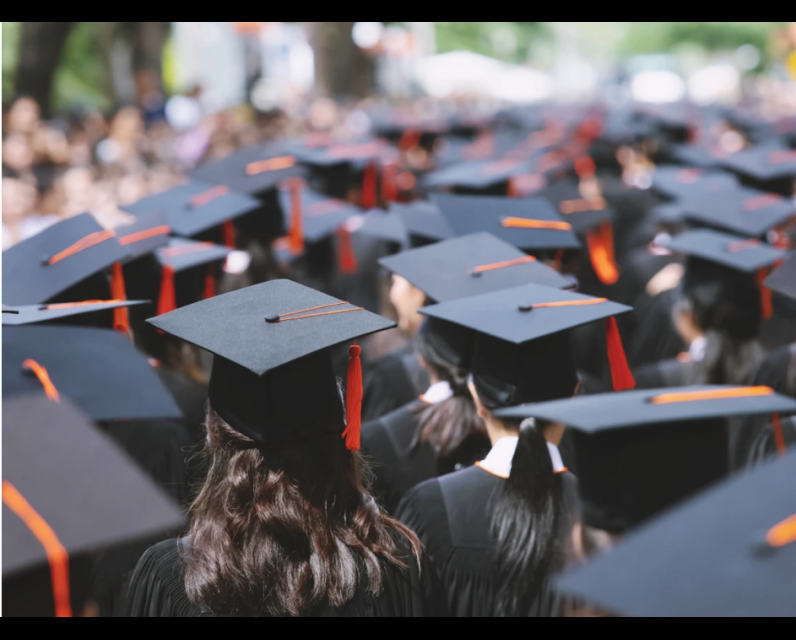
Ontario Education Minister, Paul Calandra, probably wasn’t thinking about Aristotle’s observation, in The Metaphysics, that the thirst for knowledge is a universal human desire, when he recently made waves by sending a letter to school boards calling for graduation ceremonies to be “strictly student-centred, apolitical, inclusive and respectful.” The letter was reportedly written in reaction to a memo sent to teachers from the Hamilton Wentworth School Board Superintendent which stated that, in addition to student achievement, graduation ceremonies should also focus on “colonization and a whole host of other divisive issues.
I have been studying democracy, civics education and the factors that contribute to democratic decline for a long time and, precisely because I champion the cause of education for a resilient and effective democratic citizenship, I think Calandra is right about keeping politics out of graduating ceremonies.
This does not mean that I favour keeping explorations of contentious political issues out of the classroom. Nor does it mean discouraging or silencing in-class expressions of dissent or of defiance vis-à-vis established hegemony or robust criticism of the status quo. It does mean that on the occasion when we recognize and honour an entire graduating class of students, the cardinal liberal principle of pluralism commends a ceremony that represents only that which can be said to hold for everyone rather than to reflect that which will undoubtedly alienate some individuals and make them feel uncomfortable and less worthy of belonging as full and equal members of the class and, by extension, of civil society.
As for what transpires in the classroom itself, a civics education designed to turn out competent stewards and champions of what Canada’s constitution calls a “free and democratic society” must focus principally on ingraining in students the morality of liberal constitutionalism rather than on enlisting students in political causes and agendas, regardless of how meritorious these might be.
When I consider the ways in which liberal democracies throughout the West have declined, I am especially struck by how average citizens in every socioeconomic category come to tolerate and accept their leaders’ departures from adherence to the norms and conventions of liberal constitutionalism. I have learned that this acceptance and tolerance result from a process of systemic habituation that normalizes transgressions of those norms and conventions and impairs the ability of citizens to come to the rescue of their own freedom and democracy. The late American Senator, Daniel Patrick Moynihan, called this process of habituation and decline “defining deviancy down.” In effect, what is at issue here is the question of whether the very human dignity that inheres in each one of us is being degraded and impaired and is being prevented from standing, as it must in any truly “free and democratic society,” as an effective constraint on the exercise of all political power and public authority.
Before granting a platform to the unfettered, if passionate and authentic, expression of student perspectives, opinions and voices on questions of power, politics, justice and fairness, public education’s first responsibility in a liberal democracy must be to arm the civic immune system against the plenitude of sources of illiberalism and against every peril to freedom and democracy that makes its appearance, whether in the garb of the autocrat, in the service of “expediency and efficiency,” in the virtuous certainty of “social justice,” or, simply, as a function of the law of unintended consequences. This does not amount to censorship, nor does it involve stifling or discouraging dissent or dismissing aspirations for change and power redistribution. It does, however, mean emphasizing the fundamentals of liberal constitutionalism — among them, the principles of equality, pluralism, self-determination, counter-majoritarianism, the rule of law, fair distribution and, not least, truth-seeking — and training our students to notice, rather than to become habituated to, actual and potential threats to those fundamentals when they arise.
It is commonplace to think of dissent as being the lifeblood of democracy. However, it is the defence of the right to dissent — but only in a manner, time and place that honour the equality and dignity of every person — rather than any particular expression of dissent, that sustains democracy and gives it resilience.
The question is whether we are more interested in an education that prioritizes engagement over learning, and activism over truth-seeking, or whether we prefer to instill in our students and future societal stewards an understanding of and commitment to the bedrock principles that safeguard the very engagement and expression of dissent that some would place at the centre of civics education. High school graduation ceremonies ought to venerate the quality of humility so essential to the growth of knowledge rather than showcase certainty and grandstanding. Our democracy would be the better for it. Aristotle would undoubtedly agree. I think the Minister would too!



Comments
Be the first to comment