

Unpublished Opinions
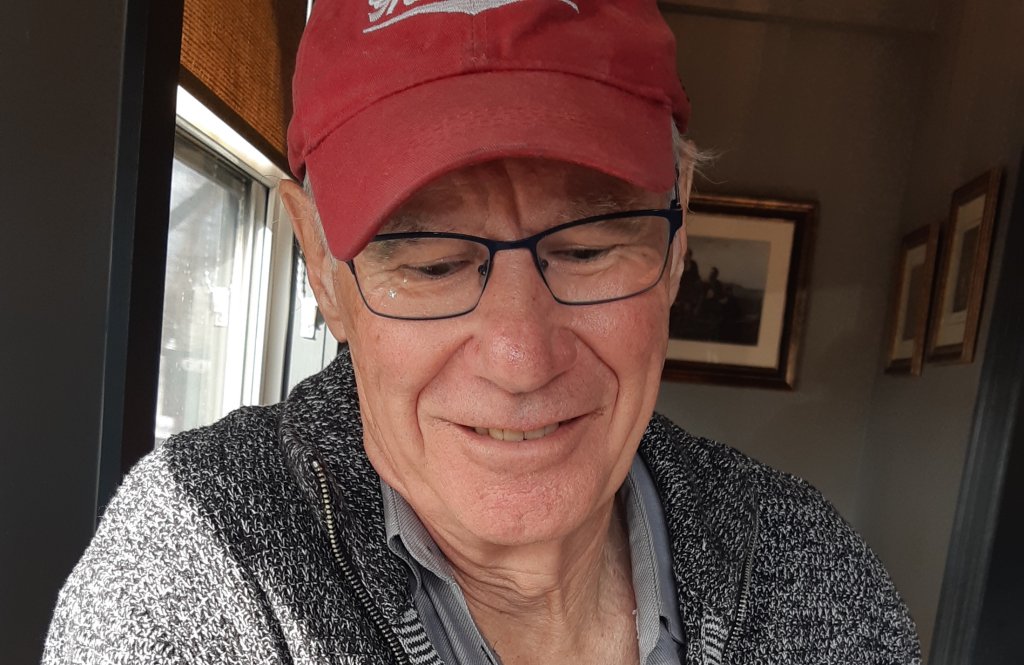
Clive Doucet is a distinguished Canadian writer and former Ottawa city councillor. He was elected for four consecutive terms from 1997 to 2010 when he retired to run for Mayor. As a city politician he was awarded the Gallon Prize as the 2005 Canadian eco-councillor of the year. He was defeated twice by Jim Watson in 2010 and 2018 when he ran for the Mayor’s chair.
Talking to Bees and thanking in the New Year
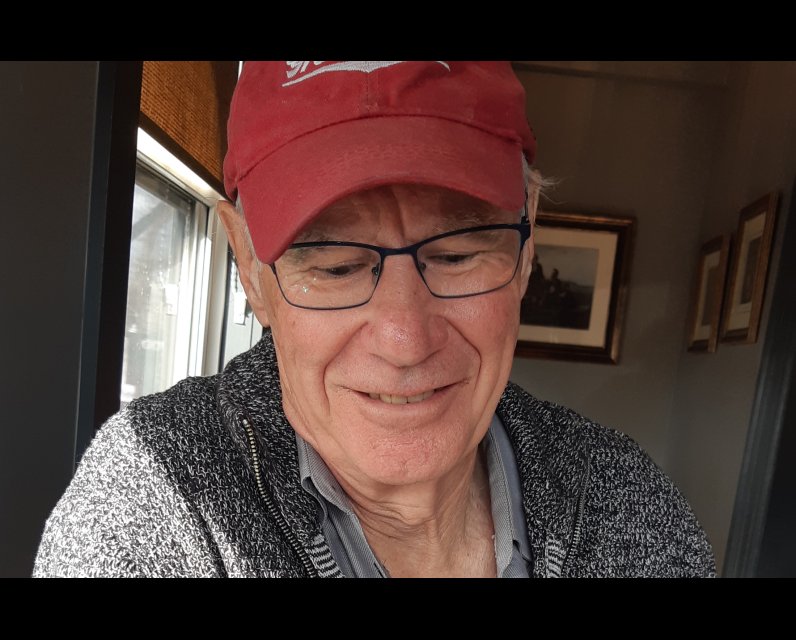
by Clive Doucet
The New Year is a good time to thank people. I have a lot of people to thank, family, friends, neighbours, the Oran, who all helped make my 2025 a better year, but I would like to begin my thanking with bees. This is easy to do because my hives are close by just over the hill tucked away in a little dip in the land. There are a lot of thank-yous waiting for me there. In summer each hive has about 50,000 bees and I have five. In winter, there are less. Each hive reduces to a small cluster of densely packed bees (perhaps 10,000) but that’s still a lot of gratitude to be expressed so I had better get started.
I’d like to thank my bees for reminding me that we are all part of the natural world, and that there are no exceptions. We are all connected, as Martin Luther King once said, “bound together by the mutuality of existence”. In the language of hockey, we are all on the same team and I find this is a comforting thought.
I’d also like to thank my bees for listening to me. I don’t know if bees care about justice, but people certainly do. I do. A just world is a world is one where everyone has freedom from want and are treated fairly one to the other; that’s the way I see it, but not everyone does. Ideas about justice between individuals and nations have changed over time but regardless of their content have always defined how people are people. Justice has been more important than sex for without justice there is little sex.
Martin Luther King once famously said, “the arc of the moral universe is long, but it bends towards justice.” Today, we are a very long way from King’s idea of how the moral universe should be unfolding. The primitive idea of ‘might makes right’ of the Middle Ages is on the rebound today. We see it in the Russian invasion of Ukraine and in the violent internal attack on the American congress.
Ideas of justice have always been a moving target. About four thousand years ago, (1739 B.C.) King Hammurabi in a vain attempt to solidify his kingdom had his ideas of justice literally chipped into an enormous stone, which sits in the British Museum today. Moses is said to have done the same thing on stone tablets with his Ten Commandments. His ideas of justice were mostly rules about the disposition and protection of property under the umbrella of God which remains central to Israel today.
Despite the tablets of great kings, human ideas of justice have continued to change. They changed with the U.N.’s Universal Declaration of Human Rights in 1948 which for the first time ascribed human rights to all humans by virtue not of nationality or ethnicity but because of a shared humanity. Ideas of Justice are changing again today as the new International Court in the Hague tries to hold individuals and nations accountable for what the Hague court calls crimes against humanity.
This new court imagines that genocide and nuclear weapons are crimes against humanity, not defensive strategies. Acceptance of this new court’s ideas about justice are a long way from being universal. Our southern neighbours (U.S.) and our northern neighbours (Russia) for example, do not think their nations are accountable to any court, and both have vast nuclear arsenals, ready to be deployed against people they regard as enemies.
If my bees are right and we are all on the same team, it seems clear that human ideas of justice have always been far from universal. They have been limited to men. Limited to men with a certain amount of property. Limited to the men of some but not all nations. The list of those not included is a lot longer than those that are. Women were not. Indigenous people were not. For example, justice didn’t include the entire human populations of North and South America who by definition weren’t human upon the arrival of Europeans because the Americas were defined as ‘terra nullius’ (unoccupied land). Apparently, local humans living there for thousands of years did not qualify as full humans. This is now seen as an oversight, and the Canadian reconciliation project is attempting to address it as the door to ideas of justice swings open a little wider.
My bees fortunately have very different ideas of justice. Their ideas of justice are almost all about keeping the hive healthy and fed. This is what their minds and bodies have always been turned towards and why they organize their hives the way they do. When male bees (drones) are ejected in the fall, it’s because they can no longer contribute to the health of the hive. They have become a serious liability.
Politicians are convinced humanity is exceptional in every way. I don’t agree. I’m not so sure the naked ape is in the grand round of the planet’s life – any more exceptional than bees. The mystery of all life is the exceptional thing, and no one really understands it except through myth. I certainly don’t. When I go, I hope to go as a human does with a little poetry and as a bee does, quickly, without fuss.
Besides gratitude, the New Year is also about hope for the winter solstice marks the time the sun begins to hang a little longer in the sky and the weeks begin to progress towards spring. My hope this New Year is that human ideas of justice will continue to grow to include more than some humans, some of the time. Justice depends on how wide you cast the circle about who can enter the circle. If you make the circle very small, then your justice system will be small, cribbed and confined. If you cast your circle wide, ideas of justice can grow as far as the net is cast.
In a very small way this has already started. The Magpie River (Muteshekau-shipu) in Quebec was granted legal personhood in 2021 by the Innu Council and the Minganie municipality, making it the first such case in Canada, giving this river rights like flowing, biodiversity, and freedom from pollution. The arguments of the lawyers was the river had life and with that life came inalienable rights as you and I have been granted by the Universal Declaration of Human Rights by virtue of nothing more than living.
Happy New Year
Clive Doucet is a poet, writer and former Ottawa City Councillor. He lives in Grand Etang, Cape Breton, Nova Scotia where he writes poetry and raises bees.
References

Comments
Be the first to comment