
Stay informed

Separation speed bump: Negotiating with First Nations
In a Canada growing more politically restless by the day, the question will not solely be whether you can divide, but whether you can add or subtract.
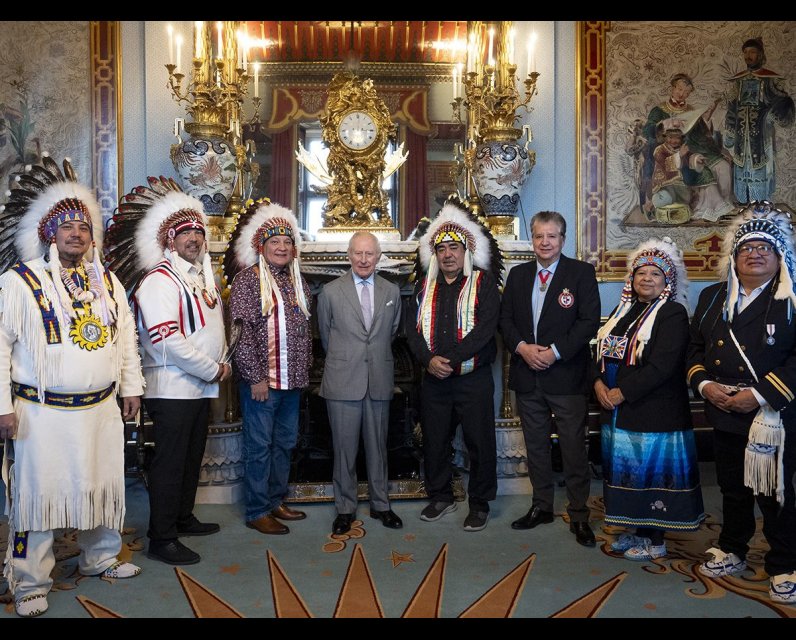
Treaty 6 First Nations’ leaders met in private with King Charles at Buckingham Palace on Wednesday, reaffirming their nation-to-nation relationship and raising concerns about Alberta’s independence.
Earlier in the week, Albertans witnessed the spectacle of chiefs from Treaties 6, 7 and 8 standing shoulder-to-shoulder with provincial NDP MLAs on the steps of the Alberta Legislature in Edmonton, calling on Premier Danielle Smith to denounce separatism.
Although it’s not yet certain a separation referendum will be put to Albertans in October, the possibility raises the question of what happens to First Nations in the province if a “yes” vote prevails.
Pro-independence lawyer Keith Wilson asserts the 138 First Nations reserves in Alberta (comprising approximately 1.3 per cent of the province’s land base) have the choice to: maintain the status quo with Canada; have Alberta assume federal responsibilities under the treaties; or negotiate modern agreements with a new Alberta government.
Those opposed to independence, including former Alberta premier Jason Kenney, frame possible separation as a “rupture” of treaties with the Crown in right of Canada, and warn First Nations’ resistance will lead to endless legal action and disruption.
Already, lawyers have been hired. Sturgeon Lake Cree Nation, representing Treaty 8 communities in northwest Alberta, is suing, among other things, for an injunction to stop Alberta from moving forward with a separation referendum based on a citizen initiative. “This case is about the consent of First Nations that is required for any separatist process in Alberta,” their statement of claim reads.
Quebec debated similar questions when sovereignty referendums were held in 1980 (under Rene Levesque’s Parti Quebecois government) and in 1995 (led by Premier Jacques Parizeau following the failure of constitutional reforms). Then, the talk was of ways to partition First Nations’ territory.
“The old ways were absolute,” acknowledges legal scholar Ghislain Otis, “it’s either you’re in or you’re out; that’s partition and chaos.”
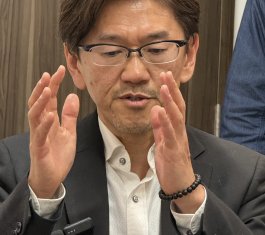
Ghislain — a member of the Quebec bar since 1984, and a professor at the University of Ottawa specializing in Indigenous rights since 2008 — has probed the question of what happens to First Nations if a province chooses to separate.
“I have voted yes in both referendums in Quebec,” he tells me. “So I have no objection in principle when it comes to contemplating independence for a province.”
This causes me pause; I don’t want to lend credence to Alberta’s separation.
Ghislain chuckles, and assures me he’s not dogmatic or militant. “I’ve always thought that it (separation) would have been regarded as a last resort approach,” he says. “Anyways, that’s politics, and we’re not going to talk about politics.”
With that, we embark on a discussion of his research.
“My papers start from the idea that, regardless of whether or not, technically speaking, Indigenous peoples have a veto over the idea of secession,” he says, in practical terms, to be successful, a secession needs legitimacy.
“Why do Indigenous peoples in Alberta and in Quebec generally oppose secession without their consent?” he asks. “It’s that they very much value their connection to the federal Crown.” That’s who they turn to for services and benefits, and “they see their continuing connection to the federal Crown as a check and balance.” First Nations wouldn’t want to be defenceless, he suggests, with an all-powerful new state.
In a 2022 McGill Law Journal paper, Ghislain explores the legal means of reconciling the potential collective choice of Quebecers to be sovereign and the legitimate aspirations of Indigenous peoples. His legal opinion? Achieving both aims is feasible.
“Quebec would be independent, but at the same time, it would have willingly delegated the exercise — part of its sovereignty — to Canada, exactly like the states which are members of the European Union actually are independent from the point of view of international law but through a treaty, the Union Treaty, they’ve delegated to Brussels the actual exercise of parts of their sovereign powers.”
Ghislain’s second idea is bolder; it’s an approach that entails the ripping-up of Canada’s paternalistic Indian Act, and goes much further.
“The problem I see with Quebec’s traditional approach — of people who favour independence for Quebec, like Bouchard, Parizeau, Lévesque, the older generation — is that basically their premises were colonial,” Ghislain asserts.
“You know, the succession of state theory is that Quebec, an independent Quebec, would merely be stepping into the shoes of Canada,” he says. “It would basically inherit Canada’s title, which would be a kind of perpetuation of the colonial foundations of Canada vis-a-vis First Nations.”
“Let’s start from scratch,” he suggests, “and let’s negotiate shared sovereignty with Indigenous peoples, and let’s recognize their sovereignty.”
Woah! I interject: the notion of Indigenous title surviving on fee simple land has created chaos in B.C. “The problem with the B.C. case,” he counters, “is that it was done by the courts. It was not done through political negotiations by sensible people.”
Ghislain’s fresh idea, he explains, would be to negotiate a new way of coordinating Indigenous sovereignty with state powers. “This will not be imposed on them unilaterally, it will be negotiated,” he reiterates.
“You know, Indigenous peoples don’t want to give up the state; they need the state. They know it. They acknowledge that,” he says. “They just want a new relationship with it.”
Our website is the place for the latest breaking news, exclusive scoops, longreads and provocative commentary. Please bookmark nationalpost.com and sign up for our newsletters here.

Unpublished Newswire


Comments
Be the first to comment