
Stay informed



What it feels like to be an air traffic controller responsible for the safety of hundreds of people
The voice of a New York air traffic controller repeatedly ordering a fire truck to stop, to no avail, will likely haunt Canadian air travellers for years to come.
Both pilots were killed, and dozens of people were injured, last Sunday night when Air Canada Flight 8646 slammed into the truck as it crossed LaGuardia Airport’s Runway 4 eight seconds after landing. The deadly incident, now the subject of a probe by the National Transportation Safety Board (NTSB), has shone a light on the burden carried by air traffic controllers in this country and their mission to keep planes landing and taking off safely across Canada.
“My heart goes out to this controller. That was my worst nightmare,” said Kathy Fox, the former head of Canada’s Transportation Safety Board (TSB), who started her aviation career as an air traffic controller.
The Jazz Aviation CRJ-900 operated on behalf of Air Canada Express collided March 22 with the truck around 11:40 p.m.
Fox is looking forward to hearing what investigators are “going to find out, all the layers that could have prevented this and prevented another controller from having to feel what that controller may be feeling right now, and people from dying, because ultimately that’s the whole thing. You don’t want anybody to suffer.”
Investigators have already revealed the fire truck wasn’t equipped with a transponder that would share its location with the air traffic controller and set off an alarm in the tower in the event it rolled on to an active runway.
“There were many, many things that didn’t go right that night,” Fox said. “And I’m quite confident that the NTSB, with the support of TSB, will get to all of the factors that could have prevented that accident because nobody is perfect. People make mistakes.”
Dennis Whyte dropped out of university in 1990 to train as an air traffic controller.
At one of his first gigs in Quebec City, Wyche said he was working on electronic equipment from the 1950s.
“It was like a double slash would represent an airplane with no digital information whatsoever on a black and white cathode ray tube, like you see in the Twilight Zone.”
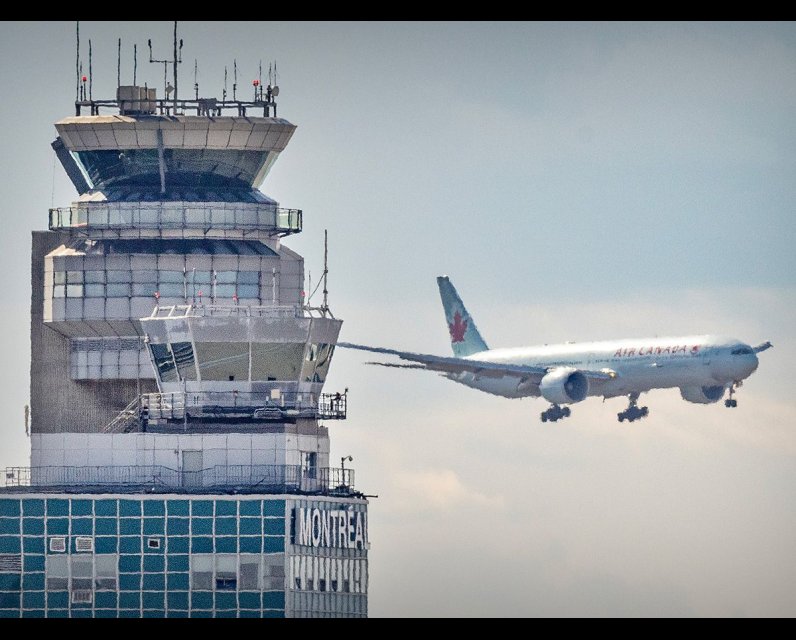
He switched to a Montreal control tower a few years later, where the gear was upgraded to digital systems.
“We had a lot of mandatory overtime, particularly in Montreal back in my day, which was my biggest beef,” he said.
“I was always working in a short-staffed specialty; there was always mandatory overtime.”
Air traffic control involves a lot of science, but he also likens it to an art.
“I used to think of it like a kind of, like a ballet or a coordinated figure skating show sort of thing, where all of the parts are moving and you’re in control and you’re in charge of making sure that the airplanes arrive in sequence. But you have to adjust speeds, you have to adjust altitudes,” said Wyche, who retired last year.
“You’re thinking in three dimensions. You’re looking ahead for each airplane. For the next 60 seconds, is there going to be a problem? Or in the next two minutes, is there going to be a problem? Am I turning somebody too much or too little?”
Wyche recalled a day when he helped a lost pilot of a small private plane heading toward mountains east of Sherbrooke in bad weather.
“He was not able to climb and fly over the mountains, and he was kind of feeling a little bit boxed in.”
The Montreal tower “could not see him on radar,” Wyche said.
Over the radio, Wyche and his colleagues helped the pilot find a landmark he recognized.
“We talked him out of it. We got him to a point where he said. ‘Oh, yes, okay, I know where I am.’ It was a pretty good day because he was in trouble.”
Wyche’s worst day on the job was in June 1998 when Propair Flight 420 caught fire shortly after take-off from Dorval and the crew tried to conduct an emergency landing at Montréal–Mirabel International Airport.
“I was the one talking to the airplane,” he said.
“Essentially, there was an engine fire, and it eventually melted the wing. We brought them towards Mirabelle Airport to land. And just before they landed, 200 feet above the ground, the wing melted off. And everyone in the aircraft died on that day. So that was the worst, probably, experience I had.”
All 11 passengers and crew died.
“We listened to the tapes afterwards and heard the professionalism of the pilot and everything that he did,” Wyche said.
“I can still remember the pilot’s voice.” He sounded “incredibly professional,” Wyche said.
“That’s what blew our minds as we were listening to the tape. This man had his life on the line.”
Armed with an undergraduate science degree in math and computer science from McGill University, Fox started training in 1974 to work as an air traffic controller.
“I wanted to work in aviation so I could earn enough money to eventually learn to fly,” she said.
“I jokingly tell people that I became a controller so I could tell pilots where to go.”
The basic training “from sort of start to finish was about a year,” Fox said.
The failure rate was high during the paid training course, she said. “Not everybody is cut out to be an air traffic controller.”
Fox had demonstrated an aptitude for mental math that made her well-suited to keep planes clear of danger.
“I was very good at spatial orientation,” she said.
“You have to be able to think ahead, think where you’re going to be in the next steps.”
In her early days, Fox worked at Quebec control towers that weren’t equipped with radar.
That meant she had to be able to figure out, not only where airplanes were in the moment, but also project where they would be after they followed her directions.
“So, if an aircraft called you 20 miles out, 15 miles out, 10 miles out, you had to be able to think, how long is it going to take for this aircraft to arrive in the airport environment? And what sort of conflicts, other traffic, they might encounter?”
Fox loved the environment of working in a control tower. “It’s the closest thing you can be to working outdoors without getting cold, you know, because you’ve got a terrific visibility.”
She got a kick out of the everyday problem solving involved in shepherding the flow of air traffic.
“I liked the feeling of satisfaction when you were able to resolve traffic conflicts, move traffic, and help people.”
Fox eventually made her way back to Montreal and a job in the Tower at Dorval.
She was directing, in the parlance of air traffic controllers, “heavy metals” that included wide-body aircraft such as 747s. Fox even worked a Concorde once.
“You’re not thinking, ‘If I make a mistake, people could die.’ Because if you were doing that all the time, I don’t think you could do the job properly.”
Air traffic controllers are forced to compartmentalize, she said. “That’s not to say that I didn’t think about it occasionally from time to time ,when I’d leave the job and think, ‘Oh gosh, that was a tight one.’ But it never prevented me from going back.”
She’d often guide several hundred aircraft into or out of Dorval in one shift.
“I remember the biggest day I ever had, and it wasn’t me working all these aircraft, it was a 24-hour period at Saint-Hubert Airport (on the south side of Saint Lawrence River) where we had an international flying competition going on, as well as the normal traffic going in and out. We had a thousand movements that day.”
At first, while she was training, Fox always had a licensed air traffic controller standing behind her, watching her every move and listening to everything she said over the radio to pilots, “and judging you.”
She still remembers the first time she was left to do the job alone.
“You don’t want pilots to complain because you’re taking too long to release them for takeoff,” Fox said. “There’s that combination of, I can do this, I’m confident, I have a licence, I’ve proven myself, but also that sense of nervousness that you don’t have that second set of eyes and ears behind you.”
Fox also worked in the Montreal Area Control Centre for several years, which was a very different environment from a tower, guiding planes outside the seven miles of air space up to about 4,000 feet surrounding the airport. “You’re in a closed room, you’re just looking at radar, you’re talking to people, you’re just seeing blips on a screen.”
Fox left operational air traffic controlling after about 15 years to go into management at Transport Canada. She moved on to senior positions at Nav Canada in 2007 when the country’s air traffic control system was privatized.
“Shift work is hard,” she said. “It’s hard on families, because you miss a lot of events. It’s hard on your body,” she said.
While the work of an air traffic controller was demanding, and overtime was sometimes mandatory, Fox got enough time off to earn her airline transport pilot licence, run a flying company, and return to McGill to get her Master of Business Administration.
“There are good things about the job in terms of more free time, good pay and benefits that make it a very rewarding career.”
The salary range for those who work as area control centre controllers is $139,333 to $201,407 annually. Tower controllers start at $101,221 and can earn as much as $201,407 per year, before overtime. Controllers in training earn about $60,000.
Nav Canada — the country’s air navigation service provider — is short 200 controllers, about 10 per cent of its workforce, said John Gradek, a faculty lecturer with McGill University’s aviation management program.
“They will not overload the controllers, so there will be no risk to safety,” Gradek said. “There will be disruption to the air services because they’re going to cancel flights.”
Staffing shortages, “particularly in some of the larger airports, have created delays,” Fox said.
The only immediate solution to those shortages is to throttle back on air traffic, she said. “The idea is, if you’re down, if you have controllers missing and you can’t open as many air traffic control positions as you should in order to handle that volume of traffic, then the only other option is to reduce the flow of traffic, which then causes delays.”
Nav Canada is “actively addressing staffing through a comprehensive, multi-year strategy focused on recruitment, training, and retention, and we are making measurable progress,” Maryam Amini, who speaks for the non-profit organization, said in an email.
“In 2024–2025, staffing growth exceeded attrition by 26 per cent. Since 2023, more than 600 air traffic service professionals have received their licenses, including more than 300 air traffic controllers, with close to 500 additional students in training across the country. In 2025 alone, we attracted 49,000 applicants, evaluated over 7,000 top candidates, and hired close to 500 students into our training programs — all records for the organization.”
Some major Canadian airports “have begun the installation and use of transponders in airport vehicles as a component of an Advanced Surface Movement Guidance Control System, in conjunction with clear and concise procedures for operators in terms of roles and responsibilities, (and) communications … designed to reduce runway incursions,” Hicham Ayoun, who speaks for Transport Canada, said in an email.
“Canada has one of the safest aviation systems in the world and the department is continuously looking for ways to maintain and enhance Canadian aviation safety.”
While some major Canadian airports have ground vehicles equipped with transponders, that’s not the case everywhere, Fox said.
She can recall days in the tower when “we couldn’t even see the runways because of fog or snow.”
Added surveillance “certainly gives you the eyes that you don’t have otherwise because of the weather environment.”
Runway incursions — which doubled in Canada between 2010 and 2021, to 471 — have been on the TSB watchlist since it was inaugurated, said Fox, who stepped down as chair of the independent agency in 2024.
“One of the things that TSB is calling for, and certainly I was a big advocate of that when I was there, is direct to pilot warnings of potential runway incursions,” she said.
“If the aircraft pilots had a system where they could see either vehicles or aircraft that were crossing runway or could be alerted to their presence, I’m not saying it would have made a difference here, but it could reduce the risk or prevent a collision in the future.”
Planes are already equipped with traffic collision avoidance systems that warn pilots if two aircraft are coming too close together in the sky, Fox said.
“The technology should be able to be implemented on the ground to give a direct-to-pilot warning of an aircraft or vehicle on the ground in case the air traffic controller isn’t able, doesn’t see, or isn’t able to communicate with the pilot to warn them about it.”
There were over 600 reported runway incursions in 2024, Fox said.
That means “somewhere in the country, there was an aircraft or vehicle on a runway that was active for takeoffs and landings.”
It doesn’t mean that there were 600 near collisions, she said. “A lot of them are benign in the sense of nothing happened.”
But “it only takes one bad one, and that’s what we saw at LaGuardia,” Fox said.
“There’s a risk of these happening, and they are increasing.”
The last time Canada saw a runway incursion cause a deadly accident came in February 1978, when Pacific Western Airlines Flight 314, a Boeing 737-200, crashed after an aborted landing to avoid a snowplow on the runway in Cranbrook, B.C., killing 43 of the 49 people on board.
Our website is the place for the latest breaking news, exclusive scoops, longreads and provocative commentary. Please bookmark nationalpost.com and sign up for our daily newsletter, Posted, here.

Unpublished Newswire


Comments
Be the first to comment