
Stay informed



Americans are confused — and fatigued — by Trump’s trade war
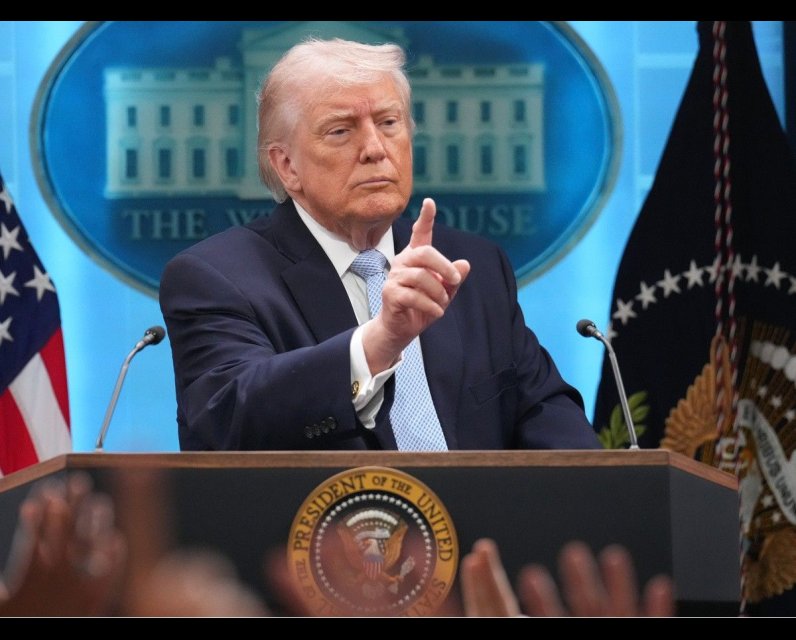
WASHINGTON, D.C. — A year after Donald Trump’s “Liberation Day,” when the U.S. president launched a slew of new tariffs on imports, fewer Americans seem to understand what it is they were being liberated from.
According to a new Pew Research Center survey of 3,507 adults, conducted between March 23 and 29, 2026, fewer Americans now believe that both the U.S. and Canada benefit equally from their trading relationship, compared to last year.
The majority of Americans, 37 per cent, still say the two countries see mutual benefits in trade, but that figure is down from 44 per cent last year, and 21 per cent said this year that Canada benefits more than the U.S., a drop from 26 per cent in 2025.
The partisan divide holds, of course, as it does with nearly everything in Washington these days.
Democrats are more likely to see trade between the U.S. and Canada as fair and balanced, while Republicans still see Canada as benefiting more overall. But the Republican figure has dropped significantly after spiking last year: In 2023, 20 per cent of Republicans saw Canada gaining more from the trade relationship, but that number soared to 46 per cent amid Trump’s tariff rhetoric last year. Now, it’s down to 36 per cent.
So, is Trump’s narrative over Canada “ripping off” the U.S. convincing fewer Americans now compared to a year ago, or is something else causing this shift?
“ It’s almost like a bit more of a return back to where they were several years ago,” said Inu Manak, senior fellow for international trade at the Council on Foreign Relations, about the Republican 10-percentage-point drop.
“That suggests that perhaps they’re not as happy with some of the things that Trump is saying, threatening other countries that have been partners for a long time.”
But fewer Republicans see Mexico as benefiting more, too. So the shifts, Manak said, “could also be shaped by Republicans thinking that Trump’s getting a better deal now.”
Maria Smerkovich, the research associate at Pew involved in the study, said she and her colleagues cannot explain what’s driving the change in Republican sentiment.
But the biggest takeaway from the study, she said, was the growing uncertainty toward trade: A full quarter of Americans now say they are unsure whether either country benefits more from trade, up from 17% last year.
“Americans are just confused,” said Smerkovich.
“They’re not sure what’s going on in these relationships, which countries benefit, if at all, from these relationships.”
This, she said, is likely related to media messaging and White House rhetoric about trade and who benefits from trade.
“We can’t speculate or say what exactly is driving these changes, but we do know that President Trump speaks about this very prominently,” she said, noting that “there is so much messaging that perhaps is contributing to the confusion.”
Still, for Canada, Americans are less confident that its northern neighbour is the main beneficiary of trade, and more uncertain overall, which could undercut the political potency of Trump’s tough-on-Canada argument.
“Americans are less willing to accept the bill of goods that (Trump) sold them that all of their ills can be laid at the door of America’s trading partners, particularly its closest ones,” said Fen Hampson, a politics professor and foreign affairs specialist at Carleton University in Ottawa.
“(Trump’s) storyline is beginning to wear thin with Americans,” Hampson said.
Andrew Hale, a fellow at Washington-based Advancing American Freedom, said Pew should have looked at more than a simple Democrat-versus-Republican split, noting that the most important bloc for Trump is white voters without college degrees and Independents.
“ If you lose the majority of white males without university degrees, you’ve got a problem if you’re President Trump, because that has historically been a key constituency of his, irrespective of party affiliation.”
Hale said it was safest to see the Pew study and other polls as showing that tariff fatigue is real.
“People are not feeling that their situations are getting better,” he said.
“The tariffs are hurting. They’re not helping.”
Manak also said Americans are tiring of tariffs.
“Americans may not know how that works or what the mechanism is, but they hear about tariffs, and they think they’re a negative thing, for the most part, and therefore are blaming Trump and then all Republicans for keeping them in place,” she said.
But could changing public opinions push Trump to ease his approach to trade with Canada?
Manak believes Canada will have more leverage in trade talks after November’s midterm elections, especially if Democrats take the House, but other experts are skeptical that Trump will bow to voter sentiment before or after the election.
“Unless there were a bigger shift in public opinion that’s more specific to Canada,” said Thomas Duesterberg, a senior fellow at the Washington-based Hudson Institute, “I wouldn’t think that those few results would really have that much of an impact.”
What could, he said, is the Court of International Trade, which will soon hear arguments about Trump’s Section 122 tariffs and the elimination of the de minimis exemption. Court limits on Trump’s authority to use tools like Sections 122, 232, and 301, Dusterberg said, matter more than voter sentiment.
Hampson and Hale also said Americans’ views were unlikely to alter Trump’s course.
“Nothing constrains Trump,” Hampson said. “Americans didn’t want a war with Iran, and they got one. He’s not restrained by public opinion.”
When asked whether public views could constrain Trump’s use of tariffs or alter his approach to this summer’s Canada-U.S.-Mexico Agreement talks, Hale was skeptical.
If stagflation sets in amid the trade tensions and slow U.S. job growth, thanks to the conflict with Iran, Hale suggested that Trump may be willing to pause or roll back tariffs – but only temporarily.
“You may get some tariff relief, and then, after the midterms, he may ramp them up again. After the midterms, he’s got really nothing to lose. He can just go forward, full-steam ahead, and to hell with everyone else.”
National Post
Our website is the place for the latest breaking news, exclusive scoops, longreads and provocative commentary. Please bookmark nationalpost.com and sign up for our newsletters here.

Unpublished Newswire


Comments
Be the first to comment