
Stay informed
Unpublished Opinions


The Day a Soviet Nuclear Satellite Crashed into the Canadian North
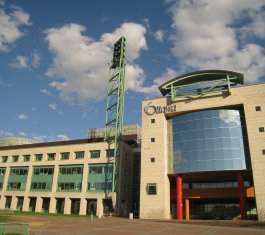
Early one morning, on January 24, 1978, Marie Roman was giving the new CBC building at the south end of Yellowknife a very thorough cleaning. We had moved into the new space a few months before. Everybody loved the sweep of the huge windows on the second floor, spanning ninety degrees from the southwest to the northeast.
Roman would have been looking south when a fiery, orange ball, with a long blazing tail, came out of the morning sky on her right, westerly, and streaked across on a very low and descending pitch. She couldn’t hear it, and in about a minute, it disappeared in the northeast. She was sure it must have crashed just beyond Yellowknife, likely in Great Slave Lake.
Others, including two Mounties, had also seen the fireball and immediately filed a report. At the big open-pit, lead and zinc Pine Point Mine, 200 kilometres across Great Slave Lake from Yellowknife, miners were staring northward, watching the fireball descend in the west and drop out of sight a few minutes later in the northeast. Gordon Graham, one of the miners, told me in 2021 that he didn’t know what it was, but he knew it would soon crash, perhaps near Fort Reliance, a small Dene community forty kilometres away.
We would soon learn that the flaming tailings belonged to a runaway Soviet satellite which had crashed in the Northwest Territories. The massive search began at that very moment, lasting several months. Only 1 percent of Cosmos 954 would be recovered—the biggest piece that had plowed into a bank of the Thelon River.
What happened to the rest of it is still a mystery. It may be fairly stated that the same percentages apply in determining what had happened: 1 percent of the questions were answered, and 99 percent of the most critical ones burned up in the atmosphere, as it were.
Russia had designed and launched Cosmos 954 in September 1977 to monitor ocean traffic, particularly North Atlantic Treaty Organization vessels and nuclear submarines. Two months later, the Americans knew the satellite was out of control and began following the bouncing ball upward and downward in its orbit, constantly tracking, recording, and calculating every wobble and shift with their spy satellites.
Through December and into January, they grew more and more concerned as it became increasingly clear that 954 would crash in North America, and they knew the potentially lethal dangers it packed in the fifty kilos—100 pounds—of enriched uranium 235 that powered the nuclear reactor. Uranium 235 was known inside and outside nuclear circles as the same deadly force packed into “Little Boy,” the atomic bomb the Americans had dropped on Hiroshima on August 6, 1945.
Eight days before Cosmos’s re-entry, the Cold War took a short recess. Talking to each other and to other allies, the Russians and the Americans shared enough secrets to confirm there was much to be concerned about. If the Cosmos 954 reactor disintegrated over a major city, like Los Angeles, Chicago, or New York, the catastrophe would be unimaginable. The Russians needed to convince the Americans that this was a reactor spinning out of control, not a nuclear bomb. They needed that fact understood and accepted, lest the satellite crash spark a nuclear counterattack against them.
Canada came into the inner circle only four days before the re-entry, when Canadian Forces Base Edmonton was put on alert. Like the Americans, the Canadian military had ninety-six precious hours to assemble detection, cleanup and recovery equipment, and crews and then load everything and everyone on its airplanes.
Canada had Hercules transport planes. The United States had four fully equipped and loaded C-141 transport planes, with twice the capacity of the Herc, standing by at three military bases in Nevada, California, and Washington, DC.
A phone call between Prime Minister Pierre Trudeau and President Jimmy Carter was the final approval of the formal agreement to conduct a joint operation. The first announcement came minutes after the two leaders spoke. Trudeau was quick to convey that Canada was in charge.
By the time I walked into the newsroom that morning, Marie Wilson, the morning reporter, had the first story written and bulletins on the air. She was in her mid-twenties and razor smart. When she heard Roman’s tale, she had the good sense to get it on tape. The first announcement from the military offered only the most basic facts. There was no indication of immediate danger. It was expected the nuclear reactor burned upon re-entry, but people needed to be cautious. “Stay indoors if possible. Do not go near or touch any strange objects.” Numbers were given to call if people found debris.
That storyline did not change. The military and government shifted focus to the search, called “Operation Morning Light,” which scoured an 80,000-square-kilometre swath of the Northwest Territories, about 100 kilometres wide and 800 kilometres long, from Yellowknife and Hay River to Baker Lake in the Central Arctic. Never mind a needle in a haystack—even the haystack would have been hard to find in that expanse.
I called in the remaining newsroom staff. The place became a madhouse of phones ringing constantly, with people reporting their specific sightings and reactions. The morning announcers, Chris Brown and George Tuccaro, conducted live interviews. It seemed that every radio station and TV outlet in the world, including our colleagues in southern CBC stations, had heard of the crash and wanted information. We tried to help where we could.
Prime Minister Trudeau was trying to explain why he had spoken to President Carter only that morning and not earlier. “Why was Canada kept in the dark?” asked opposition leader Joe Clark.
The more Trudeau tried to explain, the more he put himself and Canada into some political and diplomatic twilight zone. Trudeau told the House of Commons that President Carter offered support, which he accepted, including the four huge transport planes that, by then, were either in Edmonton or on their way to Yellowknife and the search area. Each was fully loaded with recovery equipment, including helicopters, and with instruments to detect and measure radioactivity. Trudeau was emphatic that Canada was in charge.
The initial response of defence minister Barney Danson provoked more outrage among many northerners than the actual runaway satellite had. “I am told there is little danger,” he said. “It is a wide area that is largely uninhabited.”
In the context of all things radioactive and nuclear, Yellowknife’s outspoken and rough-and-ready mayor, Fred Henne, went ballistic at the government’s indifference toward Northern peoples. The territorial capital, with 10,000 people, was directly in the firing line for the satellite’s final moment aloft. Cosmos had also brushed by three more of the largest communities in the North at the time: Hay River, Fort Smith, and Pine Point.
Considering the debris found close to Fort Resolution, a small Chipewyan village on the southeast shore of the lake, and Snowdrift, now Łutselk’e, 200 kilometres beyond on the east arm of the lake, it could have crashed in either community.
In the days ahead, the military’s Geiger counters clicked and buzzed in both Fort Resolution and Snowdrift. The two small Dene communities became major focal points early in the search. Dressed in yellow or white protective suits, masks, and big white boots, soldiers detected and removed hundreds of tiny fragments in the immediate area around both communities. Some shovelled the surrounding snow into big plastic garbage bags, contradicting the health and safety assurances. Constant official statements that there was no immediate danger were further contradicted by the arrival of special lead containers to store and transport other small pieces of debris.
Meanwhile, Mayor Henne and many others, both northerners and southerners, wanted to know why more warning had not been given, considering the possible consequences.
American authorities reached back to a 1930s radio broadcast for their explanation. Orson Welles’s famous “War of the Worlds” broadcast, portraying an alien invasion of American cities, was so convincing that it caused widespread panic. Both Canadian and American authorities said they hadn’t wanted to risk repeating that chaos.
That explanation left both the militaries with a very serious credibility problem. Suddenly, after the satellite was down somewhere over a vast wilderness area, and after the big southern cities were safe, the message from the same authorities was: “Trust us!”
A week after the crash came the most remarkable find—that was publicly disclosed, anyway. The largest Cosmos 954 pieces ever found were discovered not by the multitude of airplanes and sophisticated detection equipment flying criss-cross patterns over the debris path (100 kilometres wide, 800 kilometres long) but rather by two adventurers travelling by dog team and living in a shack along the Thelon River in a big-game sanctuary north of the Saskatchewan–Manitoba border.
More bizarrely, they were almost next door to Camp Garland, the hastily constructed temporary military base built on the ice near Łutselk’e to facilitate the search. Camp Garland even had an ice landing strip that could handle Hercules airplanes.
On January 28, four days after the crash, John Mordhorst, who was overwintering in a cabin near Warden’s Grove, a small cluster of trees in a deep river valley, saw the wreckage and what appeared to be antenna cables protruding from the snow in the bank of the Thelon River. Mordhorst and five other young men were following in the footsteps of English explorer Jack Hornby, who had died in the area fifty years earlier.
Mordhorst and his companion even joked about a Russian spaceship, until they returned to the cabin and learned from others about radio reports on the crash and the now-frantic search. One radio call to Yellowknife, 500 kilometres away, brought soldiers and more airplanes to their little shelter. For a short time, the search took on a new twist.
Within twenty-four hours, military aircraft and technicians arrived at the campsite to take charge and quickly swarm the crater. Mordhorst and his group were promptly evacuated to Edmonton for radiation testing.
A couple of days later, our reporters, Wilson and Joe Tobie, were part of the press pool flown to Edmonton, outfitted with spacesuit-style protective gear, and then flown back north to the temporary Camp Garland and Warden’s Grove to report on a search that, at least in the military’s view, was beginning to show results.
The Warden’s Grove discovery produced the largest piece of the satellite ever found, but disappointingly, it amounted to only about sixty kilograms of a spacecraft that weighed five to six tonnes. The search for the reactor core intensified but yielded only tiny traces, like flakes of ashes that nevertheless were highly radioactive—and, with continued exposure, deadly.
In March, control shifted from a joint military operation to the Atomic Energy Commission of Canada, now the Canadian Nuclear Safety Commission. The civilian commission accepted the original assessment that the reactor had burned up during re-entry.
Planes with sophisticated tracking instruments flew more than 600 missions and thousands of hours. Soldiers in helicopters or on snowshoes or snowmobiles on the ground searched in the bitter, god-awful cold, deep snow and rough terrain. They boxed or bagged the debris and removed it from the territory.
In retrospect, the story became how such a thorough search could recover so little.
Now, after forty years have passed, science is taking a new interest. In 2018, the scientific journal Northern Review published a detailed study by geographers Ellen Power, from the University of Toronto, and Arn Keeling, of Memorial University, who conducted an extensive review of the Cosmos 954 research and the events that followed. It concluded with a striking question: Why so little follow-up?
Power focused her thesis on the recollections and continuing concerns of the Indigenous people in Łutselk’e and Fort Resolution. Her interviews revealed that people there lived with four decades of uncertainty, not knowing whether the water they drink or the fish or wildlife or berries on which they depend for food are free from contamination.
When searching databases on the event, it’s striking to note how little research was done on the flora and fauna of the area around the east arm of Great Slave Lake and the Thelon Wildlife Sanctuary, established in 1920 to protect the great caribou herds from overhunting. This area is where the greatest amounts of nuclear fallout were detected. The Canadian Nuclear Safety Commission acknowledges that, in the years following the Cosmos 954 crash, there was no focused or specific research done on radionuclides.
Full disclosure: for six years, I was chairman of the Canadian Polar Commission, which advised the federal government on persistent organic pollutants (POPS), like DDT and food-safety concerns relative to Indigenous peoples. The contaminants issue often preoccupied our work; however, neither the Polar Commission, nor any other group, advanced the need for long-term monitoring of the effects of Cosmos 954 fallout on wildlife. I will not offer “we were not asked to” as an excuse. We didn’t—and I regret that now, perhaps because of the caribou.
Caribou herd was the main source of food for every Dene family in that vast region—and would still be today were it not quickly approaching endangered levels. Today, the population of Bathurst caribou is about 8,000 animals, which means it has declined by a shocking 98 percent over the past forty years. Many reasons are cited: natural predators, overhunting, climate change, forest fires, and industrialization being the most common. What’s not mentioned is Cosmos 954.
I’ve always liked the expression that there are sins of commission and sins of omission—and often the sin of omission is the greater. What strikes the reporter in me now is how much we still don’t know and how so little has been studied and written about the Great Slave Lake that still feeds a thousand or more people every day.
In grandeur, the depth of that big lake matches its length and width. Its deepest point, on the east arm, is 614 metres, more than 2,000 feet. If a large part of the Cosmos core remained intact, would military minds say there’s no better place for it than in the deepest water possible? How does any reporter pin all these facts, figures, images, contradictions, and self-interest—including the need to “avoid panic”—against the wall like a detective, connect the dots, and not ask: Could Cosmos 954 have been aimed?
Wilson, now in her seventies, still lives in Yellowknife with her husband, former Dene leader and Premier Stephen Kakfwi, their three grown children, and several grandchildren. The last word on Cosmos should go to her:
“Today, I wish the younger reporter in me had thought to challenge the irony of the name itself: Cosmos 954. Cosmos is a word we use to describe the universe—it implies a complex, calm, orderly system. The satellite that came crashing through the skies that morning brought nothing but chaos, leaving a fiery tale of fear, suspicion, and countless questions about facts and impacts. As I remember, it felt more like Chaos 954.”
Adapted and excerpted, with permission, from From Ragged Ass Road to Rideau Hall: Stories of Canada by Whit Fraser, published by Douglas & McIntyre, 2026.
The post The Day a Soviet Nuclear Satellite Crashed into the Canadian North first appeared on The Walrus.
Unpublished Newswire

Comments
Be the first to comment