
Stay informed


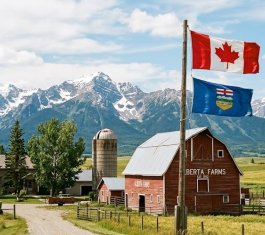
Weekly Quiz: Canada’s Potential Water War, Alberta’s Separatist Movement, and Montreal’s Mile End
1
2
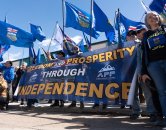
const title = "Weekly Quiz: Canada’s Potential Water War, Alberta’s Separatist Movement, and Montreal’s Mile End"; const date = "May 2, 2026"; const data = [ { image: "https://walrus-assets.s3.amazonaws.com/img/WebArt_RepublicAlberta-1536x1024.jpg", title: "Separating from Canada Would Be an Economic Disaster for Alberta", url: "https://thewalrus.ca/separating-from-canada-would-be-an-economic-disaster-for-alberta/", question: "Alberta separatists have put forward different visions for what an independent Alberta would look like. What form of government does the Alberta Prosperity Project (APP) advocate for?", options: [ "A constitutional monarchy to retain ties to the British Crown", "A confederacy of cantons to mirror the Swiss", "A parliamentary republic", "A constitutional republic", ], answer: "A constitutional republic", correct: "The APP argues that an independent Alberta would become a constitutional republic, “because a republic is the safest, freest, strongest, and best way to protect the Albertan’s rights, freedoms, dignities, and home.” Cameron Davies, leader of the Republican Party of Alberta, posits that an independent Alberta could perhaps take inspiration from Barbados, which officially ditched the British Crown and became a republic in 2021. “We have a number of republics around the world that we can take the best parts of,” Davies said. “Let’s make a twenty-first-century made-in-Alberta constitution and bill of rights that puts the people back in power.”", incorrect: "The APP argues that an independent Alberta would become a constitutional republic, “because a republic is the safest, freest, strongest, and best way to protect the Albertan’s rights, freedoms, dignities, and home.” Cameron Davies, leader of the Republican Party of Alberta, posits that an independent Alberta could perhaps take inspiration from Barbados, which officially ditched the British Crown and became a republic in 2021. “We have a number of republics around the world that we can take the best parts of,” Davies said. “Let’s make a twenty-first-century made-in-Alberta constitution and bill of rights that puts the people back in power.”", }, { title: "Trump Is Thirsty for Canada’s Water, but Our Own Gluttony Is the Bigger Threat", url: "https://thewalrus.ca/trump-is-thirsty-for-canadas-water-but-our-own-gluttony-is-the-bigger-threat/", question: "Canada is often seen as one of the most water-rich countries in the world due to its vast share of the planet’s freshwater. This perception has contributed to a widespread belief that we have more than enough water to meet our needs. Why is this sense of abundance misleading?", options: [ "Much of our water is locked away in glaciers and ice caps", "Much of our water flows north, away from population centres", "We export the majority of our water to other countries", "We lack reliable data on how quickly our lakes are shrinking", ], answer: "Much of our water flows north, away from population centres", correct: "About 20 percent of the fresh water in all the lakes on Earth resides in Canada, but 60 percent of Canada’s surface water actually flows north to subarctic and Arctic regions—moving in the opposite direction from where most Canadians can access it. Our access is also spotty: water is not plentiful everywhere. Many First Nations have been left on their own when it comes to securing safe water to drink. In spite of progress made to lift long-term drinking-water advisories, thirty-nine such notices remained in effect in thirty-seven First Nations communities in Canada as of February. These realities do not stop many of us from behaving like world-class water gluttons, just behind our neighbours to the south. According to the Water Footprint Network, the amount of fresh water consumed by Canadians per capita per day, both directly and indirectly, is around 6,400 litres.", incorrect: "About 20 percent of the fresh water in all the lakes on Earth resides in Canada, but 60 percent of Canada’s surface water actually flows north to subarctic and Arctic regions—moving in the opposite direction from where most Canadians can access it. Our access is also spotty: water is not plentiful everywhere. Many First Nations have been left on their own when it comes to securing safe water to drink. In spite of progress made to lift long-term drinking-water advisories, thirty-nine such notices remained in effect in thirty-seven First Nations communities in Canada as of February. These realities do not stop many of us from behaving like world-class water gluttons, just behind our neighbours to the south. According to the Water Footprint Network, the amount of fresh water consumed by Canadians per capita per day, both directly and indirectly, is around 6,400 litres.", }, { image: "https://walrus-assets.s3.amazonaws.com/img/Web_QuebecsCancelledImmigration_Apr26_04-1536x1024.jpg", title: "Quebec Promised Francophone Immigrants a Fast Track to Permanent Residency—Then Changed Its Mind", url: "https://thewalrus.ca/quebec-immigrants-permanent-residency/", question: "After abolishing the Programme de l’expérience québécoise (PEQ)—a fast-track immigration pathway for foreign graduates and skilled workers—Quebec introduced its replacement, the Programme de sélection des travailleurs qualifiés (PSTQ). What is the key difference in how the two programs assess applicants?", options: [ "The PSTQ relies on a points-based system, while the PEQ relied on fixed and transparent criteria", "The PSTQ processes applications faster, while the PEQ had long wait times", "The PEQ used a lottery system, while the PSTQ guarantees acceptance for qualified applicants", "The PEQ required employer sponsorship, while the PSTQ allows independent applications", ], answer: "The PSTQ relies on a points-based system, while the PEQ relied on fixed and transparent criteria", correct: "Unlike the PEQ, for which the criteria were fixed and transparent, the PTSQ relies on a points system that weighs factors such as education, work experience, French proficiency, and labour-market demand, but offers little clarity about how candidates are ranked or when invitations will be issued. Critics, including immigration lawyer Laurence Trempe, who has appeared before Quebec’s Assemblée nationale to raise concerns about the program closure, say the new system lacks stability and transparency. “It’s like tax—you need to plan in advance,” says Trempe. “If the tax rules changed every year, it would be very hard to plan for. It’s the same thing with immigration.”", incorrect: "Unlike the PEQ, for which the criteria were fixed and transparent, the PTSQ relies on a points system that weighs factors such as education, work experience, French proficiency, and labour-market demand, but offers little clarity about how candidates are ranked or when invitations will be issued. Critics, including immigration lawyer Laurence Trempe, who has appeared before Quebec’s Assemblée nationale to raise concerns about the program closure, say the new system lacks stability and transparency. “It’s like tax—you need to plan in advance,” says Trempe. “If the tax rules changed every year, it would be very hard to plan for. It’s the same thing with immigration.”", }, { title: "Mile End Kicks: The Strange Sensation of Seeing Myself in the Buzzy Montreal Movie", url: "https://thewalrus.ca/mile-end-kicks/", question: "The new film Mile End Kicks offers a fond look back at Montreal’s vibrant 2010s indie music scene. In the years since, the cultural landscape has shifted in ways that have reshaped the neighbourhood itself. What is one phenomenon that writer—and Mile End Kicks extra—Rosie Long Decter attributes to that transformation?", options: [ "The pivot away from DIY venues to corporate-run performance spaces", "The relocation of major indie labels to Toronto and New York", "The rise of social media changing how artists build audiences", "The financialization of real estate and consequently high rents", ], answer: "The financialization of real estate and consequently high rents", correct: "“Everyone has their own version of when Mile End died,” writes Long Decter. “It could have been when St. Viateur West venue Cagibi left the neighbourhood in 2018, or maybe the opening of a local Lululemon in 2017. Perhaps it was before Torontonians showed up in the early 2010s once it was already buzzy, helping to fuel the neighbourhood’s gentrification. But what’s certain is that, in the time since Mile End Kicks is set, real estate financialization has skyrocketed rent prices in the city, while the provincial government has reduced key protection for renters. Many of Mile End’s DIY venues and art spaces have been replaced by an endless supply of sterile restaurants, while the bottom has fallen out of the music industry, with artists competing for fewer scraps in the streaming economy.”", incorrect: "“Everyone has their own version of when Mile End died,” writes Long Decter. “It could have been when St. Viateur West venue Cagibi left the neighbourhood in 2018, or maybe the opening of a local Lululemon in 2017. Perhaps it was before Torontonians showed up in the early 2010s once it was already buzzy, helping to fuel the neighbourhood’s gentrification. But what’s certain is that, in the time since Mile End Kicks is set, real estate financialization has skyrocketed rent prices in the city, while the provincial government has reduced key protection for renters. Many of Mile End’s DIY venues and art spaces have been replaced by an endless supply of sterile restaurants, while the bottom has fallen out of the music industry, with artists competing for fewer scraps in the streaming economy.”", }, ];
The post Weekly Quiz: Canada’s Potential Water War, Alberta’s Separatist Movement, and Montreal’s Mile End first appeared on The Walrus.
Unpublished Newswire

Comments
Be the first to comment