1. Opening / Context
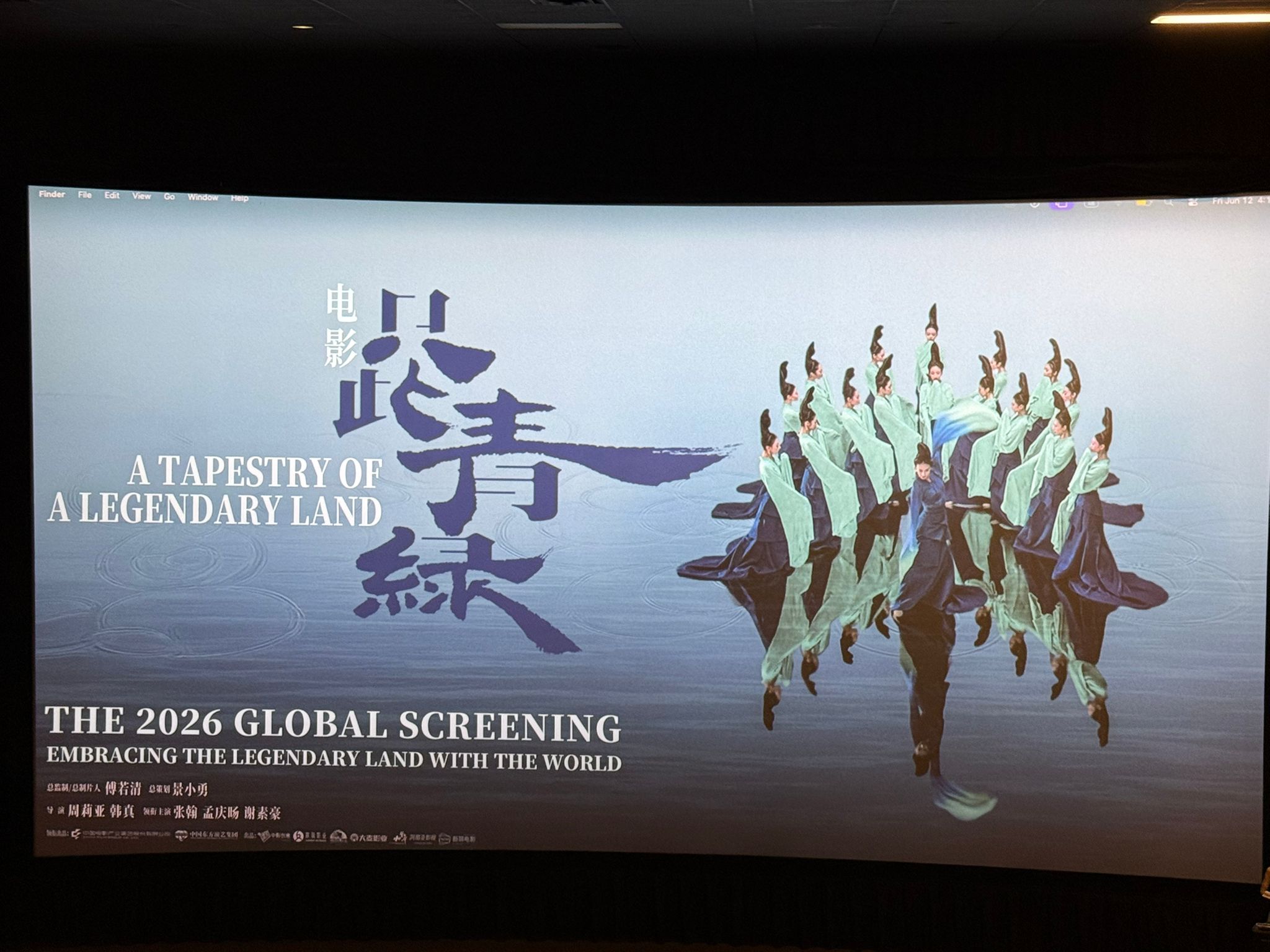
A Tapestry of a Legendary Land is a dance‑drama inspired by the Song‑dynasty masterpiece A Thousand Miles of Rivers and Mountains. As dance‑based storytelling becomes increasingly common in both theatre and cinema, this film embraces the form fully — using the body as the primary narrative instrument, with minimal dialogue and maximal visual expression.
Created in collaboration with the Palace Museum (故宮博物院) inside the Forbidden City, the film was released alongside the museum’s special exhibition of the actual scroll. The painting itself was last publicly exhibited in September 2017, one of only a handful of times it has been shown due to its extreme fragility.
Notably, the film took seven years to complete, a timeline that reflects the scale of its cross‑disciplinary collaboration — involving historians, conservators, choreographers, traditional craft experts, and digital artists — as well as pandemic‑era delays. The result feels as meticulous and layered as the scroll that inspired it.
2. Plot Overview
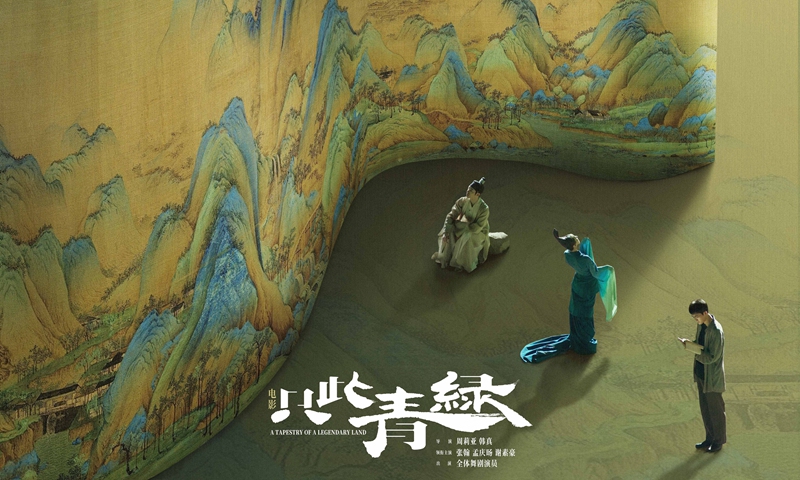
The story begins in the modern day, following a male art conservator preparing the ancient scroll for its rare public exhibition. As he unrolls and examines the painting, the film transitions into the imagined world of the young prodigy painter Wang Ximeng, revealing how he created the monumental landscape.
One of the film’s most poetic devices is the cross‑generational interaction between the conservator and the painter. They “meet” across time without ever truly meeting — connected through the artwork itself. The film moves fluidly between eras through dance, color, and movement rather than dialogue.
3. Performances & Characters
The film’s two central performers — Zhang Han as Wang Ximeng and Xie Suhao as the modern art conservator (credited symbolically as “Scroll Unroller” on some websites) — form the emotional spine of the narrative. Their roles are archetypal rather than literal, but their physical performances carry clarity and depth.
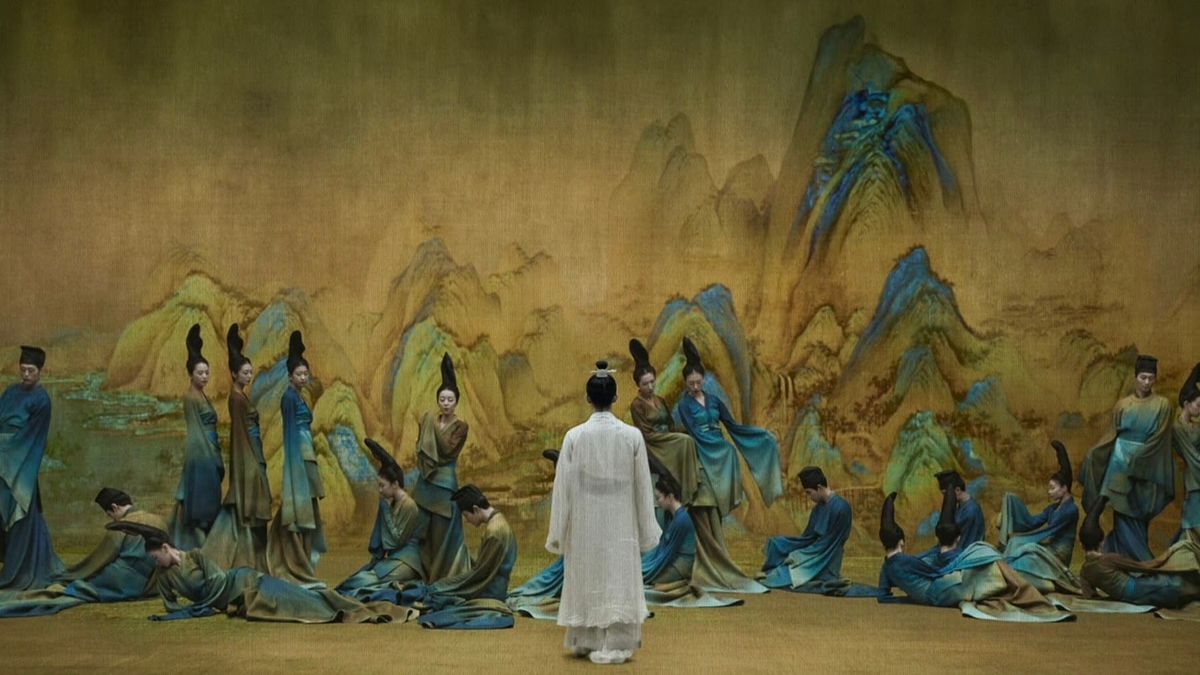
The dancers overall deliver astonishing work, embodying not only human figures but also landscapes, pigments, and artistic materials. A standout moment is the duets between the two male lead performers, a sequence that is unexpectedly tender, fluid, and visually breathtaking — like two brushstrokes intertwining on the same scroll. Their movement expresses collaboration, tension, and artistic lineage more eloquently than words ever could.
4. Technical Elements
Direction: Chen Kaige blends historical imagination with contemporary sensibility, treating dance as a bridge between eras.
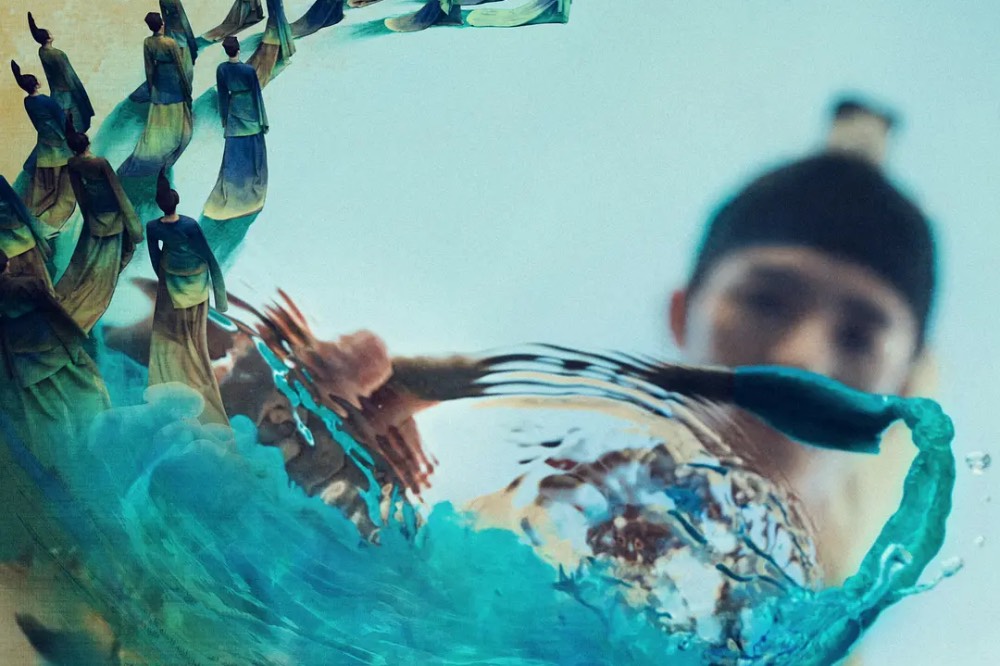
Cinematography: The film resembles a living scroll — mineral greens, indigo blues, and different shades of grey wash across the screen like ink dissolving in water.
Music/Sound: The score is perfectly synchronized with the dancers’ bodies, creating a rhythmic unity that feels ceremonial.
Editing/Effects: Transitions between the modern setting and the imagined Song‑dynasty world are fluid, though some sequences linger longer than necessary.
Production Design: One of the film’s most unusual strengths is its attention to art‑making tools — the ink‑stick makers (製墨人), brush makers (製筆者), silk weavers (織絹女), and seal carvers (刻印匠).
The film also explicitly honors modern art keepers and conservators, acknowledging the people who preserve fragile cultural treasures so they can survive across centuries.
5. Themes & Impact
What resonated with me most is how the film reframes both creation and preservation.
When people look at an artwork, they usually focus on the artist and the visible materials — the canvas (in this case, silk), the pigments, the ink. But this film goes further. It brings into view the craftspeople who made the tools, the invisible contributors whose work makes masterpieces possible.
Equally moving is the film’s tribute to modern conservators, embodied by the male art keeper who prepares the scroll for exhibition. His presence reminds us that heritage is not only created but also protected.
The cross‑temporal “meeting” between the conservator and the painter suggests that art is a continuum — a lineage of hands, skills, devotion, and memory.
The dance form amplifies this philosophy: the body becomes the brush, the ink, the landscape, and the emotional thread connecting past and present.
6. Conclusion & Recommendation
A Tapestry of a Legendary Land is a visually sumptuous, emotionally resonant dance‑film that expands the boundaries of cinematic storytelling. Its choreography is breathtaking, its music exquisitely paired, and its philosophical generosity — especially toward the unseen artisans and modern conservators — gives it rare depth.
The modern‑day framing, the cross‑temporal interaction, and the male duet add layers of emotional texture that make the film linger long after it ends.
★★★★½





Comments
Be the first to comment